





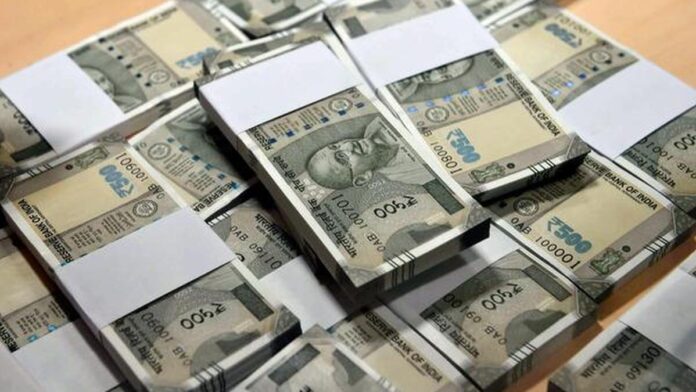

In a powerful sign of expanding social welfare commitments, twelve Indian States are set to collectively spend ₹1.68 lakh crore on unconditional cash transfer (UCT) schemes for women in 2025–26, according to a new report by PRS Legislative Research.
This marks a dramatic rise from just two States implementing such schemes three years ago, signaling how direct cash support for women has become a mainstream welfare strategy even amid mounting fiscal strain.
Welfare Expansion Amid Fiscal Pressure
The report noted that six of the 12 States projecting large-scale UCT spending have also reported revenue deficits this year.
“Among the 12 States implementing UCT schemes, six have estimated a revenue deficit in 2025–26. However, adjusting the revenue balance to exclude spending on UCT schemes shows an improvement in fiscal indicators,” PRS said.
Essentially, without the burden of these payouts, several States would post healthier budgets a reminder of the tension between welfare expansion and fiscal discipline.
Women-Centric Schemes Transforming State Budgets
Unconditional cash transfers where eligible women receive monthly payments directly to their bank accounts have become a political and social hallmark across States.
Some of the flagship programmes include:
-
Tamil Nadu’s Kalaignar Magalir Urimai Thogai Thittam – ₹1,000 per month
-
Madhya Pradesh’s Ladli Behna Yojana – ₹1,250 per month
-
Karnataka’s Gruha Lakshmi Scheme – ₹1,500 per month
These schemes primarily target women from low-income or vulnerable households, identified through income thresholds, age, and socio-economic criteria.
Fiscal Adjustments and Growing Costs
According to PRS, Karnataka would move from a revenue deficit of 0.6% of its GSDP to a surplus of 0.3% if UCT spending were excluded. Similarly, Madhya Pradesh’s surplus would rise from 0.4% to 1.1%.
The Reserve Bank of India (RBI) has earlier flagged this issue, warning that expanding subsidies and cash benefits for women, farmers, and youth could limit fiscal space for long-term investments such as infrastructure or healthcare.
Mixed Approaches Across States
While some States are scaling up payments, others are tightening spending:
-
Assam and West Bengal have raised allocations to women’s schemes by 31% and 15% respectively.
-
Maharashtra reduced payouts under its CM Ladki Bahin Yojana in April 2025.
-
Jharkhand, in contrast, increased payments under the CM Maiyan Samman Yojana to ₹2,500 per month in late 2024.
The contrasting approaches highlight how States are balancing welfare expansion with fiscal caution ahead of the 2026 election cycle.
A Balancing Act for India’s Welfare Economy
As the number of cash transfer schemes multiplies, economists say the challenge lies in maintaining fiscal sustainability while ensuring gender-focused social empowerment.
For now, the trend is clear women’s cash transfer schemes are no longer peripheral welfare initiatives but a core component of India’s evolving economic policy framework.