





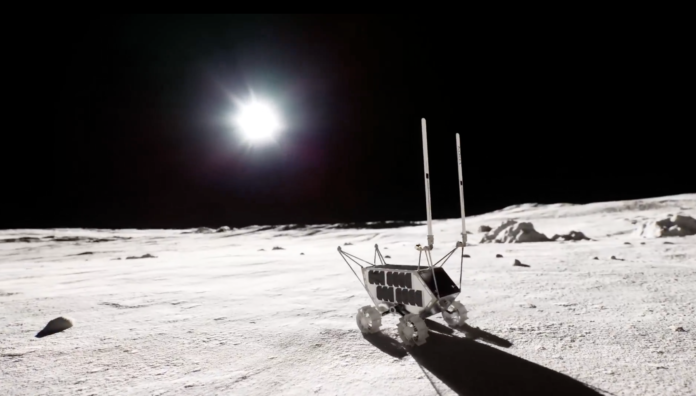

In a groundbreaking advancement for space exploration, NASA and Nokia have successfully launched the first-ever mobile network on the Moon. This initiative, a key part of NASA’s Artemis program, aims to establish a sustainable communication system that will facilitate future lunar missions, including human habitation.
Lunar Surface Communication System (LSCS) Deployed
The mobile network, named the Lunar Surface Communication System (LSCS), was deployed via the Athena lander as part of Intuitive Machines’ IM-2 mission. Utilizing 4G and 5G technology, this system will enable real-time data transmission, high-definition video streaming, and command-and-control operations for robotic and, eventually, human explorers. Unlike previous lunar communication methods, this network is based on terrestrial cellular technology, ensuring more reliable and resilient connections.
Testing the Network with Lunar Rovers
Two robotic explorers—Intuitive Machines’ Micro-Nova Hopper and Lunar Outpost’s Mobile Autonomous Prospecting Platform (MAPP) rover—will test the newly deployed network. These rovers, equipped with Nokia’s communication modules, will transmit real-time data to the Athena lander, allowing for enhanced exploration and data collection.
The Micro-Nova Hopper is expected to explore the Moon’s permanently shadowed craters, leaping across its surface to reach areas that are otherwise inaccessible. Meanwhile, the MAPP rover will aid in resource prospecting, a crucial step in preparing for sustained lunar habitation.
A Step Towards Human Presence on the Moon
The Artemis program aims to establish a long-term human presence on the Moon, with the first crewed landings planned for later this decade. The LSCS mobile network will play a pivotal role in enabling astronauts to communicate effectively, operate lunar bases, and coordinate scientific research.
This launch follows Intuitive Machines’ recent success in becoming the first private company to land on the Moon, further paving the way for commercial and scientific advancements beyond Earth.
With mobile connectivity now on the Moon, NASA and Nokia have taken a significant step toward making the lunar surface more accessible and interconnected than ever before.