





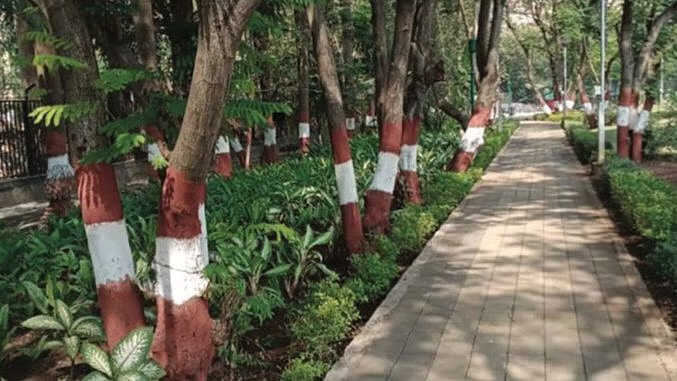

If you’ve ever taken a long road trip through India, you’ve probably noticed something curious—rows of tree trunks painted white, orange, or even red along highways and rural roads. At first glance, it seems decorative, maybe even a touch of roadside aesthetics. But like most things in India, there’s a deeper story behind this simple act.
The truth? It’s not just about looks—it’s about survival.
A Practical Art: Why Trees Get Their Colors
In Indian summers, when the scorching sun beats down relentlessly, trees face a silent battle. The white paint, usually a lime wash, acts as a natural sunscreen, preventing the trunk from overheating and cracking. Much like we protect our skin with SPF, trees need a shield too.
But it’s not just about the heat. The white layer also protects against fungal infections, insects, and disease. In a country where trees are centuries-old sentinels of highways, keeping them healthy is crucial.
Why Orange? A Guide for the Road
The orange or red bands serve an entirely different purpose—visibility. Imagine driving at night or during thick monsoon fog. A single streetlamp flickers, and visibility drops. Those brightly painted trunks become lifesavers, warning drivers about trees dangerously close to the road.
This isn’t just an Indian thing—many countries use reflectors or paint to mark roadside obstacles, but India’s method is deeply rooted in local wisdom and cost-effective solutions.
A Tradition That Stands the Test of Time
Tree painting is not a new practice. For generations, farmers and forest officers have been using lime and natural paints to protect trees from insects. Over time, the method found its way to highways, urban streets, and even temple roads.
What’s even more fascinating? In some states, different colors are used to mark specific information: 🔸 Red or blue might indicate trees that are government-owned.
🔸 Green markings sometimes mean the tree is protected under conservation laws.
🔸 Orange bands often appear in areas prone to accidents, serving as an extra warning.
It’s a simple, cost-effective, yet deeply thoughtful way of integrating nature into our everyday infrastructure.
Beyond Function: A Symbol of Roadside India
For many of us, these painted trees are more than just markers on a highway. They’re a piece of nostalgia, reminders of childhood road trips, stopping under shady trees for a chai break, or simply staring at the hypnotic pattern of painted trunks zooming past.
They are part of India’s visual language—practical yet poetic, an intersection of tradition and necessity.
So, the next time you see a tree trunk dipped in white and orange, take a moment to appreciate its silent role in keeping travelers and trees safe, visible, and thriving.