





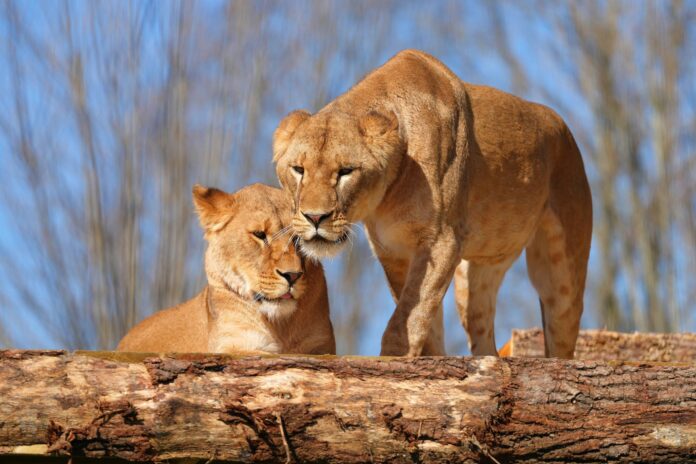

In a world where war spares neither humans nor animals, five lions, once trapped in the horrors of Ukraine’s frontline, have found a new lease on life in England. Rescued from abuse, malnourishment, and war’s devastation, these big cats are now settling into their new home at The Big Cat Sanctuary in Ashford, southeast England.
Survivors of War and Human Greed
These lions—Rori, Amani, Lira, Vanda, and Yuna—were not just victims of war; they were first victims of human greed. Taken from the illegal pet trade and wildlife trafficking, they were treated as mere commodities.
-
Yuna lived in a tiny brick enclosure, suffering from shell shock after missile debris rained down near her.
-
Rori was mistreated in a private menagerie, a caged existence where cruelty was routine.
-
Amani and Lira, believed to be bred for tourist selfies, had known nothing but exploitation.
-
Vanda, in one of the most horrifying cases, was kept inside an apartment, starving and covered in parasites.
Their lives had been reduced to survival in a world where warlords and profiteers saw them as disposable. But in a remarkable effort, Ukrainian rescuer Natalia Popova and her Wild Animals Rescue Center risked everything to save hundreds of animals abandoned in war-torn Ukraine—including these five lions.
A Journey to Freedom
Their escape was anything but easy. After surviving bombings and abuse, the lions made their way to temporary shelters in Belgium before enduring a 12-hour journey by road and ferry to reach the sanctuary in England.
It was a race against time—and against death. The Big Cat Sanctuary launched a massive fundraising campaign in May 2024, collecting over £500,000 ($650,000) to ensure these lions wouldn’t just survive but thrive.
Healing Begins: A Sanctuary Built for the Wounded
The Big Cat Sanctuary’s new Lion Rescue Center, now officially open, is tailored to each lion’s individual trauma and recovery needs:
-
Yuna and Rori, both suffering from coordination issues, have enclosures designed to prevent falls.
-
Amani and Lira finally have trees to climb, a taste of the life stolen from them.
-
Vanda, the most playful of the group, gets a water feature to explore, a far cry from the apartment prison she once endured.
Briony Smith, the sanctuary’s curator, has already noticed a transformation in the lions.
“It’s a journey. They still have healing to do, but they’re taking everything so incredibly well,” she says. “You can already see their welfare improving.”
A Second Chance at Life
For Yuna, the turnaround has been extraordinary. She arrived at the sanctuary unable to walk, mentally and physically shattered.
“She was so severely traumatized that euthanasia was being considered,” says Cameron Whitnall, Managing Director of the sanctuary. “But we fought to get her out of Ukraine, and now she’s thriving.”
Yuna, who had never even felt grass under her paws, now walks confidently. She loves raw chicken legs, and her caretakers take joy in seeing her rediscover the wild instincts war and captivity had tried to erase.
A Symbol of Hope Amidst Chaos
These lions represent more than just a rescue mission. Their story is a powerful reminder of how human actions—whether through war, greed, or kindness—shape the fate of the innocent.
“They were victims of war, victims of human cruelty,” Whitnall reflects. “But now, they can finally be the lions they were always meant to be.”
As the world grapples with conflict and destruction, these five lions stand as a testament to survival, resilience, and the undying fight for justice—not just for humans, but for every living being caught in the crossfire.