






Reasi, J&K |
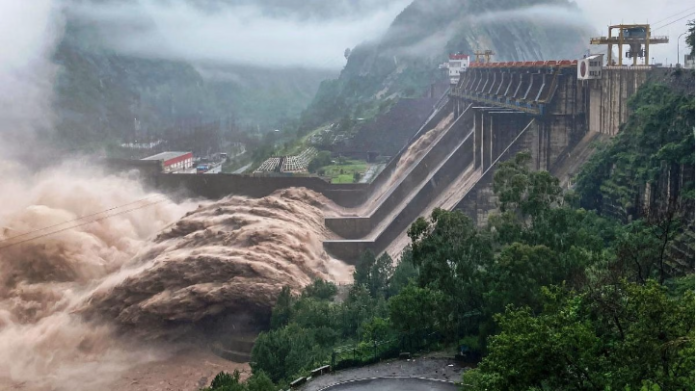
In a decisive shift from diplomatic restraint to strategic assertion, India on Wednesday opened multiple gates of the Salal Dam on the Chenab River, allowing an enormous surge of water to rush toward Pakistan. This follows the suspension of the Indus Waters Treaty and India’s Operation Sindoor, a multi-target military strike on terror camps across Pakistan and PoK.
The signal is clear: terrorism will no longer go unanswered, and water — once a symbol of cooperation — is now a tool of deterrence.
💧 Salal & Baglihar Gates Opened
According to officials, two more floodgates of the Baglihar Dam in Ramban were also opened the same day. While the official statement cited “rising rainfall levels,” the timing aligns too precisely with India’s escalated posturing against Pakistan.
With Chenab being one of Pakistan’s lifeline rivers, critical to its agriculture and hydroelectricity supply, the release has strategic implications. Analysts now warn of a potential water crisis in downstream regions of Pakistan if India maintains or repeats such action.
🗣️ “For decades, India honored every line of the treaty. But bloodshed in Pahalgam has altered the rules of engagement,” said a senior Indian official on condition of anonymity.
🌊 Why This Matters
- Strategic Shift: From military targets to resource control — India is showing Pakistan that every instrument of national power is on the table.
- Treaty Fallout: With the Indus Waters Treaty now suspended, India has legal and moral room to reconfigure how it manages water flows.
- Agricultural Blow: Over 80% of Pakistan’s agriculture depends on rivers like the Chenab. This move sends a direct signal to Islamabad: stop terror or risk withering fields.
🧠 The Bigger Picture
India’s new approach includes diplomatic warnings, military precision, economic leverage, and now hydrological power. This multi-dimensional doctrine is designed not just to retaliate — but to redefine the cost of cross-border terrorism.