






Trump’s ‘dead economy’ jibe sparks political storm, fuels debate over India’s growth trajectory and US-India trade ties.
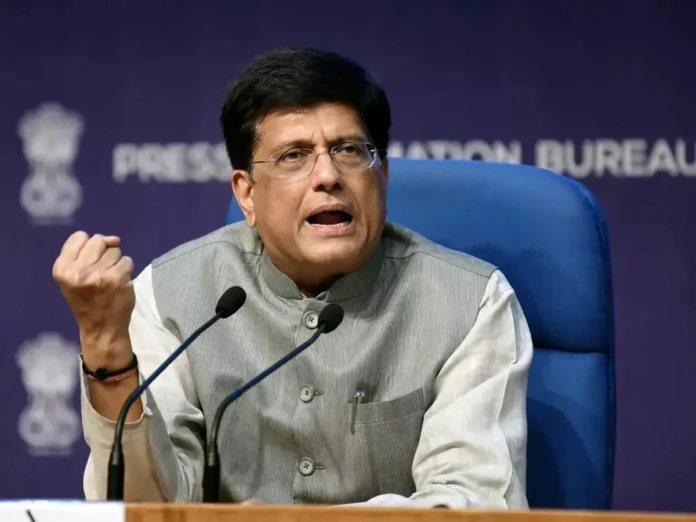
US President Donald Trump’s sharp remarks calling India’s economy “dead” have triggered a fierce political debate in India. Commerce Minister Piyush Goyal countered the criticism in Parliament, asserting that India remains the world’s fastest-growing major economy and is on course to become the third-largest economy in the coming years.
The controversy erupted after Trump, while announcing 25% tariffs on Indian imports effective August 1, targeted India and Russia, saying:
“I don’t care what India does with Russia. They can take their dead economies down together, for all I care.”
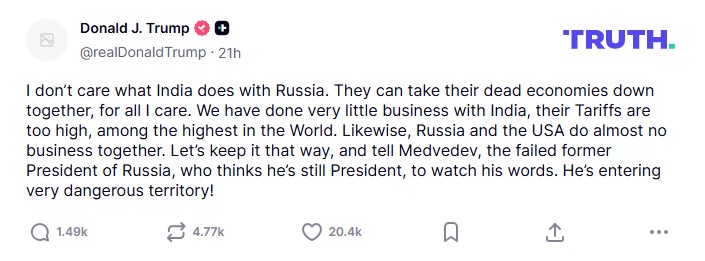
The comments, linked to India’s continued crude oil purchases from Russia, prompted swift political reactions at home and renewed scrutiny of US-India trade relations.
Political Reactions: BJP vs Congress
While the government defended India’s economic strength, Congress leader Rahul Gandhi endorsed Trump’s remarks, calling the Indian economy “dead.”
“Everybody knows this except the prime minister and the finance minister. I’m glad President Trump has stated a fact,” Gandhi told reporters, sparking criticism from the BJP.
BJP leaders condemned Gandhi’s statement as an “insult” to 140 crore Indians. Amit Malviya, BJP IT cell head, argued that Gandhi’s remarks undermine India’s achievements:
“This is not a dead economy. This is a surging, resilient India.”
Union minister Anurag Thakur accused Gandhi of habitually amplifying “anti-India statements,” while Shiv Sena (UBT)’s Priyanka Chaturvedi said Indian economy is among the top five economies of the world and calling it “dead” can only come from a position of “arrogance” or “ignorance”.
“Not that one needs to say it there’s enough legitimate data available to know that Indian economy is in the top 5 of the world and one of the fastest growing economies. Calling it a dead economy can only come from a position of arrogance or ignorance. Thank you for your attention to this matter!” Ms. Chaurvedi said in a post on X.
Goyal’s Defence in Parliament
In his suo motu statement, Commerce Minister Piyush Goyal strongly rebutted Trump’s jibe:
-
India contributes 16% to global growth.
-
It has risen from the 11th largest to one of the top five economies in just over a decade.
-
India’s reforms, from manufacturing push to MSME support, have driven this transformation.
“We have moved from being one of the Fragile 5 to the fastest-growing major economy. Our reforms, skilled workforce, and resilient industries are driving India’s rise,” Goyal said.
He highlighted trade deals with the UAE, UK, Australia, and EFTA nations, with more in the pipeline, underscoring India’s integration into global supply chains.
The Tariff Impact and Trade Pressures
Trump’s tariff announcement, accompanied by an unspecified “penalty,” has raised concerns over MSMEs, farmers, and export-oriented industries. The move is seen as part of Washington’s broader trade strategy, where it has recently clinched favorable deals with Japan, the UK, and the EU.
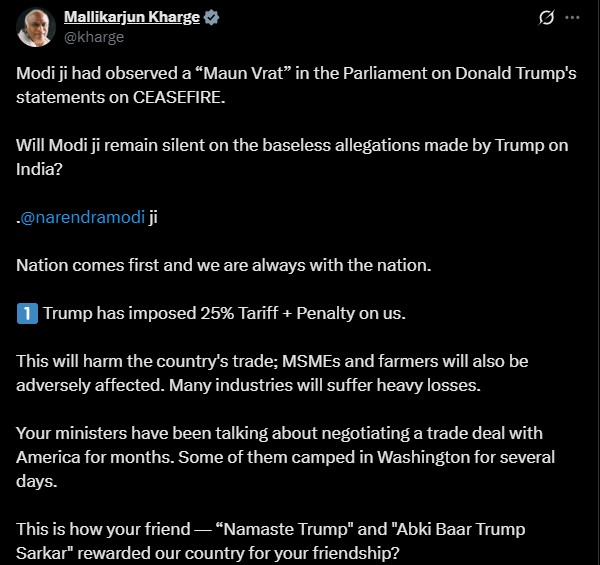
India’s oil imports from Russia, which have surged from 0.2% pre-war to 35–40%, remain a sticking point for Washington. Congress chief Mallikarjun Kharge criticized PM Modi for his “silence” on Trump’s remarks, arguing that the tariffs would hurt MSMEs and farmers.
“This is how your ‘Namaste Trump’ friendship has been rewarded—with tariffs and penalties,” Kharge said on X.
India’s Economic Outlook Remains Robust
Despite the political war of words, India’s macroeconomic fundamentals remain strong. Economists point to robust exports, a young workforce, rising FDI, and manufacturing reforms as key drivers sustaining growth amid global headwinds.
Goyal reiterated that the government will “take all necessary steps to safeguard national interest” and continue trade negotiations with the US, even as it examines the tariff implications.
The clash over Trump’s “dead economy” remark underscores the complex intersection of geopolitics, trade policy, and domestic politics. While tariffs pose a near-term challenge, India’s growth narrative—backed by strong reforms and demographic advantages—remains central to its positioning as a key driver of global growth.