





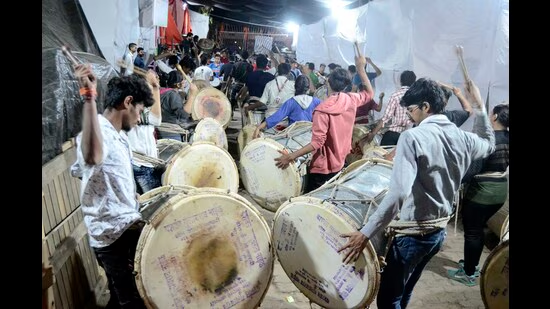

With Ganesh Chaturthi just weeks away, Pune’s dhol-tasha pathaks have begun daily rehearsals across the city. But for many residents—especially senior citizens, students, and those with health conditions—the pounding beats are becoming a source of distress.
Citizens from various localities have urged the Pune Municipal Corporation (PMC) and police to implement strict sound regulations, monitor noise levels continuously, and limit the size of practice groups in residential areas.
Dhol-tasha, a traditional Maharashtrian musical ensemble, combines the deep beats of the large double-headed dhol and the high-pitched rhythm of the single-headed tasha. While celebrated for its cultural value, residents say the unregulated volume and hours-long practice sessions near homes are impacting health.
“Playing dhol-tasha is a good cultural activity, but playing it loud for hours near homes is affecting our health. People with high blood pressure, cancer survivors, and others with ailments cannot manage such high decibels,” said Vihang Shah, a Baner resident and founder of Green Clean Safe Bharat. He added that students are also struggling to concentrate during exam preparations, warning that prolonged exposure could lead to hearing issues later in life.
Shah suggested that groups use dedicated public spaces or auditoriums for practice so residents don’t feel trapped in their own homes.
Audiologist Dr. Kalyani Mandke from Sadashiv Peth said noise pollution from dhol-tasha, DJs, or other loud music can affect all age groups.
“It disturbs adrenaline levels, causes stress, disrupts sleep, and can lead to gradual hearing damage. It also affects work output and productivity,” she explained.
The challenge has grown since September 2024, when the Supreme Court stayed an earlier National Green Tribunal (NGT) directive requiring real-time sound monitoring during the Ganesh festival and limiting dhol-tasha groups to 30 members each during visarjan.
“After the NGT order was stayed, it has become harder to keep a check on noise pollution. Authorities must take suo motu action, and groups should willingly limit their members in public interest,” said Rahul Jadhav, a resident of Wakad.
Some groups are already adopting noise-dampening methods. “We use jute bags and nylon padding on the dhol to reduce sound, and practice in smaller batches to control noise,” said Tejas Pathak from Shreeram Dhol-Tasha Pathak.
This year, Ganesh Chaturthi falls on August 27, beginning a 10-day celebration that will conclude with Ganesh Visarjan. Whether the festivities will balance cultural tradition with residents’ health concerns remains to be seen.