





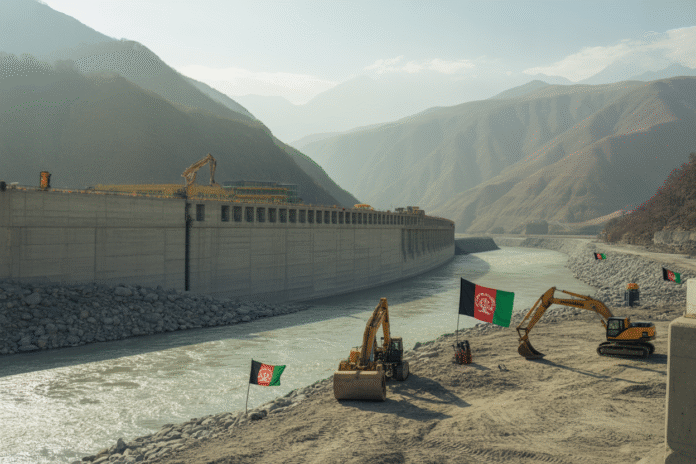

Pakistan’s water troubles are mounting, as Afghanistan’s Taliban-led government has begun constructing a dam on the Kunar River, a move that could significantly cut the water flow to Pakistan. The decision follows escalating tensions along the Afghanistan–Pakistan border and mirrors India’s earlier move to suspend parts of the Indus Waters Treaty after the Pahalgam terror attack.
Afghanistan’s Strategic Dam Project
According to reports by Russian outlet RT, the Afghan foreign ministry confirmed that the new dam aims to limit Pakistan’s water supply. The project, launched on the Kunar River, comes as both nations trade accusations amid intensifying border violence.
Fighting along the border flared on October 11, with clashes involving tanks, weapons, and improvised explosive devices (IEDs). The violence erupted after Pakistan carried out strikes in Kabul and Paktika province, targeting the Tehrik-i-Taliban Pakistan (TTP) a group that Islamabad claims operates from Afghan soil.
Tensions Beyond the Battlefield
The dam construction is being viewed as a political and strategic move, reflecting Afghanistan’s growing defiance against Pakistan’s dominance in the region. It also underscores how water — not just land — is fast becoming a tool of power in South Asia’s geopolitics.
For Pakistan, this adds another front to an already worsening water security crisis, particularly after India’s recent decision to suspend parts of the Indus Waters Treaty in response to the April 22 Pahalgam terror attack that killed 26 civilians.
A Treaty Under Strain
Signed in 1960 and mediated by the World Bank, the Indus Waters Treaty governs the sharing of the Indus River and its six tributaries between India and Pakistan. Five of these rivers flow through India’s side, with one on Pakistan’s.
The treaty has long been hailed as a rare example of successful cooperation between the two archrivals — but recent geopolitical developments are threatening to unravel that balance.
Regional Implications
Experts warn that the combined actions of India and Afghanistan could leave Pakistan facing severe water shortages in the coming years, especially in agricultural zones that rely heavily on river flow from both neighbors.
While Afghanistan’s dam project is still in its early stages, its timing just months before Pakistan’s general elections could inflame both domestic political pressures and cross-border instability.
As tensions ripple across the region, what began as a series of isolated disputes over water may soon evolve into South Asia’s next major diplomatic flashpoint.