





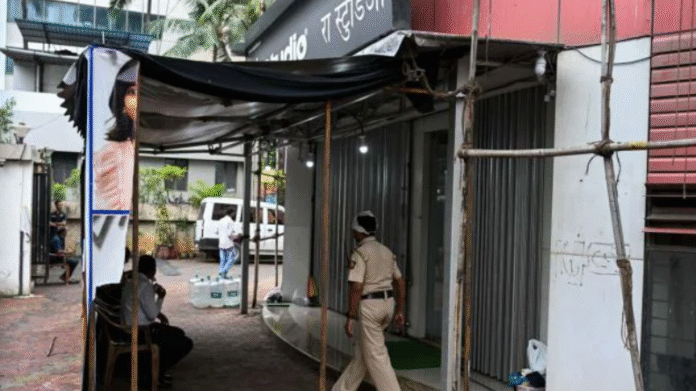

The tense hostage situation at a Powai studio in Mumbai, where Rohit Arya held 17 children captive before being shot dead by police, has sparked questions about the city police’s response protocol particularly, why the Quick Response Team (QRT) did not lead the operation despite being on standby.
Senior officials explained that the decision was tactical. Rohit Arya, they said, had installed CCTV cameras across the studio, allowing him to monitor movements outside. Deploying heavily armed QRT personnel in uniform could have exposed the plan and provoked panic, risking the children’s lives.
According to police, the crisis began around 1:30 pm, when Arya, armed with what appeared to be a gun, barricaded himself and 17 children inside the Powai studio. Local police officers quickly reached the spot, led by a senior inspector who began negotiating with Arya over phone and video calls. Parents of the hostages were also brought in to plead with him to release the children.
By 3:30 pm, the QRT had arrived at the scene, along with the Special Task Force (STF) and the Bomb Detection and Disposal Squad (BDDS). Negotiations continued for nearly 90 minutes, but Arya reportedly grew more agitated and refused all offers, including one to speak with Shiv Sena leader Deepak Kesarkar.
“After an hour and a half of dialogue, it became clear that he wasn’t going to surrender. We identified a small entrance through the bathroom, and since Arya could monitor the main entry through CCTV, we decided to send in plainclothes officers,” a senior Mumbai Police officer said.
The Quick Response Team, formed after the 26/11 terror attacks, is trained for high-risk counterterror and hostage operations. However, police officials explained that in this case, the decision to allow local officers to intervene was made to avoid alarming the suspect. “If the QRT entered in full gear, Arya would have seen them and possibly harmed the children. So, officers at the scene changed into casuals and entered quietly,” the official added.
The operation culminated when Inspector Amol Waghmare entered the studio through the bathroom window. Within seconds, Arya reportedly pointed a weapon at him later found to be an airgun prompting Waghmare to fire a single shot that killed Arya instantly.
Defending Waghmare’s decision, a senior official said, “It was a matter of seconds. With 17 children’s lives in danger, he took a split-second call. At that moment, no one could confirm whether the gun was real or fake.”
The Mumbai Police have since written to the district collector requesting a magisterial inquiry, as mandated in cases involving police firing. The crime branch is also conducting a separate investigation into the sequence of events and will soon record statements from the officers and witnesses present.
While the swift resolution prevented a potential tragedy, the incident has reignited debate over Mumbai’s hostage response protocols and when elite units like the QRT should be deployed in high-risk civilian crises.