





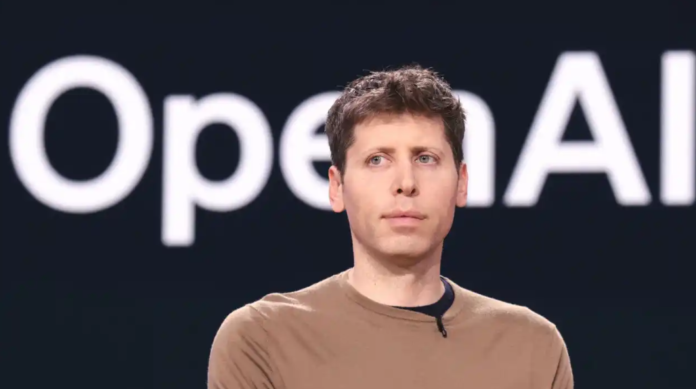

OpenAI CEO Sam Altman has acknowledged that his company narrowly avoided being overwhelmed by Google in the early stages of the artificial intelligence race. He said Google’s delayed response to the launch of ChatGPT gave OpenAI a vital opportunity to establish itself as a leading force in generative AI.
Altman made the remarks during a conversation on the Big Technology Podcast with host Alex Kantrowitz. Reflecting on the competitive landscape in 2023, Altman said OpenAI could have faced serious trouble if Google had moved faster and more decisively.
“If Google had taken us seriously early on, we would have been in a really bad place,” Altman said. “I think they could have just crushed us.”
His comments offer rare insight into how timing, strategy, and business models shaped the current AI landscape.
Google’s Strength Became a Strategic Constraint
Altman argued that Google’s massive success in search and advertising slowed its ability to pivot fully toward AI-first products. While he described Google as having “probably the greatest business model in the tech industry,” he said that strength became a strategic limitation.
According to Altman, Google’s dependence on advertising revenue made it difficult for the company to disrupt its own core products. He suggested that embracing AI too aggressively could have threatened Google’s existing profit engine.
“I think they will be slow to give that up,” Altman said, referring to Google’s advertising-driven search model.
He criticised Google’s approach of adding AI features incrementally to existing products. Altman argued that “bolting AI onto web search” limits the technology’s true potential and results only in marginal improvements.
AI Needs Reimagined Products, Not Add-Ons
Altman stressed that meaningful AI innovation requires building entirely new products rather than retrofitting old ones. He said companies need to rethink how people interact with technology in an AI-first world.
“Bolting AI onto the existing way of doing things is not going to work as well as redesigning products from scratch,” he said.
He used messaging platforms as an example. While AI-powered summaries or draft replies offer convenience, Altman believes the real future lies in autonomous AI agents.
“I don’t want to spend all day messaging people,” he said. “I want AI to handle routine communication and only surface what truly matters.”
Altman described a future where AI manages tasks independently, allowing humans to focus on higher-level decisions rather than constant digital interactions.
OpenAI Declared ‘Code Red’ After Gemini Launch
Altman revealed that OpenAI declared a “code red” internally following Google’s launch of its Gemini 3 model. He said such alerts occur once or twice a year when serious competitive threats emerge.
Despite Google’s advances, Altman pointed out that ChatGPT continues to dominate user adoption. He said the platform currently serves around 800 million weekly users, reinforcing OpenAI’s position at the centre of the AI ecosystem.
To maintain momentum, OpenAI has accelerated product development. The company recently launched its GPT-5.2 model and introduced a new image-generation system. These releases came amid growing pressure from rivals including Google, Meta, and other AI labs.
Timing Played a Critical Role
Altman credited Google’s slower response after ChatGPT’s public release as a defining factor in OpenAI’s rise. He said that delay allowed OpenAI to refine its technology, build partnerships, and scale rapidly.
The admission highlights how execution speed can outweigh sheer scale in fast-moving technology shifts. While Google possessed superior resources and data, OpenAI moved quickly to capture public imagination and developer interest.
Industry analysts say this window helped OpenAI secure strategic backing, including its deep partnership with Microsoft, which provided cloud infrastructure and enterprise reach.
The Battle for AI Leadership Continues
Altman’s comments underline how competitive the AI sector has become. Major technology companies now race to build AI-native platforms rather than incremental features.
While Google has since accelerated its AI efforts, OpenAI’s early lead continues to shape the market. The debate over whether AI should enhance existing systems or replace them entirely remains central to the industry’s future.
Altman made it clear that OpenAI intends to keep pushing forward. “The future belongs to AI-native products,” he said.
As competition intensifies, the next phase of the AI race will likely hinge on who can reimagine digital experiences most effectively not just who can add the smartest features.