





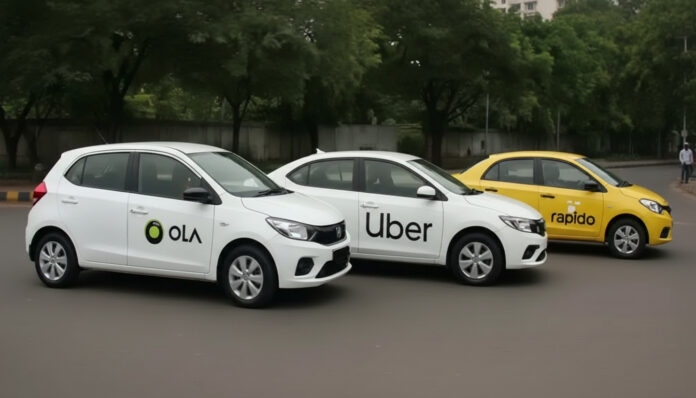

App-based taxi and autorickshaw drivers across India observed a day-long nationwide strike on February 7, disrupting transport services in several cities as unions representing gig and platform workers intensified their protest against falling incomes, rising operational costs, and what they describe as deepening exploitation by aggregator companies.
The shutdown affected drivers associated with major ride-hailing and logistics platforms, including Ola, Uber, Rapido, Porter and other app-based transport and delivery services. Union leaders said the strike was aimed at pressuring both the Centre and state governments to enforce minimum base fares under the Motor Vehicle Aggregator Guidelines, 2025, and introduce statutory protections for gig workers.
Falling Incomes, Rising Costs
At the heart of the protest is the allegation that governments have failed to notify and enforce base fares, allowing aggregator companies to unilaterally fix prices through opaque algorithms. According to unions, this has left drivers with little bargaining power and declining per-trip earnings, even as fuel prices, vehicle maintenance costs and daily operating expenses continue to rise.
Drivers claim they are being compelled to work longer hours to maintain basic income levels, often without adequate insurance coverage, social security, or compensation for occupational risks such as road accidents.
“The entire risk is borne by the worker, while pricing power rests entirely with the platform,” a union representative said. “This is not entrepreneurship; it is algorithmic exploitation.”
Unions Behind the Call
The nationwide protest was jointly called by the Telangana Gig and Platform Workers Union (TGPWU) and the Indian Federation of App-Based Transport Workers (IFAT), two of the most prominent organisations representing app-based transport and delivery workers.
Shaik Salauddin, founder-president of TGPWU and national general secretary of IFAT, said the lack of enforcement of existing regulations had significantly worsened working conditions across the gig economy.
“The Motor Vehicle Aggregator Guidelines, 2025 clearly mandate consultation with recognised worker unions before fare fixation,” Salauddin said. “However, governments have failed to act, enabling platforms to deepen exploitation while drivers are pushed into financial distress.”
Panic Button Compliance Adds Financial Burden
The February 7 shutdown also coincided with a day-long strike by app-based taxi and autorickshaw drivers in Maharashtra, called by the Maharashtra Kamgar Sabha. In addition to fare-related grievances, the Maharashtra protest highlighted concerns around illegal bike taxi operations and repeated changes in panic button compliance rules.
Unions said frequent revisions in state-level approvals for panic button devices have placed an unnecessary financial burden on drivers.
“While around 140 panic button device providers are approved by the central government, nearly 70 per cent of these have been declared unauthorised at the state level,” the union said in a statement. “As a result, drivers are being forced to remove previously installed devices and spend nearly ₹12,000 again to install new ones.”
Drivers argue that the costs are imposed without clarity or uniform standards, while the responsibility for compliance is shifted entirely onto them.
Illegal Bike Taxis and Insurance Gaps
Another major flashpoint has been the rise of what driver unions describe as illegal bike taxi services. According to the unions, many such services operate without valid permits, proper driver verification, or insurance coverage.
They allege that victims of accidents involving illegal bike taxis are often denied insurance compensation, leaving passengers and riders vulnerable. At the same time, the rapid increase in autorickshaws under open permit policies has intensified competition, further eroding earnings for existing drivers.
“This is an uneven playing field,” a union leader said. “Those following the rules are penalised, while illegal operators function unchecked.”
Mixed Impact Across States
Speaking to news agency PTI, Maharashtra Kamgar Sabha head Dr Keshav Khirsagar said the strike received support from a majority of taxi and autorickshaw drivers across Maharashtra and several other states.
However, the impact varied by region. In several cities, taxis and autorickshaws continued to operate through app-based platforms despite the strike call, limiting overall disruption. Union leaders acknowledged that the absence of uniform enforcement and the economic vulnerability of drivers made sustained shutdowns difficult.
“Many drivers want to protest but cannot afford to lose a day’s income,” one organiser said.
Political Engagement and Earlier Protests
Amid the nationwide agitation, a delegation of transport and delivery gig workers met Lok Sabha Leader of the Opposition Rahul Gandhi in New Delhi, urging him to push for central legislation to protect gig workers and ensure better enforcement of existing guidelines at the state level.
The February 7 protest follows earlier nationwide actions by gig workers, including a shutdown by platform-based delivery workers on December 31. That protest saw unions warning of service disruptions during peak hours over low wages, excessive working hours, and the absence of social security benefits.
Protests Likely to Continue
Union leaders said the February 7 strike was part of a broader movement and warned that protests would continue unless governments move decisively to regulate fare structures, curb illegal transport services, and provide statutory protections for gig workers in the app-based transport and delivery sector.
As India’s platform economy expands rapidly, the standoff highlights growing tensions between aggregator-driven business models and the livelihoods of millions of workers who keep those platforms running.
For now, unions say, the message from drivers is clear: without enforceable rules and fair pricing, the gig economy’s growth will continue to come at the cost of worker security