






As the newly announced India–United States trade framework triggers anxiety among farmers’ groups across the country, India’s largest dairy cooperative Amul has sought to calm fears, asserting that the agreement does not compromise domestic agriculture or dairy interests and instead opens up long-term opportunities for Indian producers.
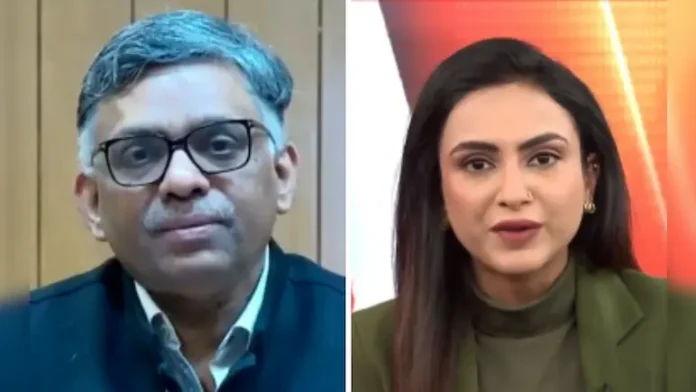
In an interview with NDTV, Amul Managing Director Jayan Mehta said concerns about an influx of cheap American farm and dairy products were misplaced, arguing that the trade deal was carefully structured to protect India’s most sensitive sectors while expanding export access for Indian goods.
“Market access is a crucial part of any trade negotiation, and trade agreements are always a two-way process,” Mehta said. “This deal has ensured that Indian agriculture and dairy remain protected, while also giving Indian products better access to international markets.”
Tariff Cuts Seen as Export Opportunity
A key element of the agreement is the sharp reduction in US reciprocal tariffs on Indian goods, from 50 per cent to 18 per cent. According to Mehta, this alone could significantly improve the competitiveness of Indian agricultural and dairy-linked exports in the American market.
“The reduction in tariffs will allow Indian products to enter the US market more competitively,” he said. “That paves the way for better growth prospects not just for cooperatives like Amul, but for millions of farmers and workers associated with the sector.”
The Amul MD stressed that the deal was negotiated precisely to expand India’s export footprint without exposing farmers to unfair competition at home.
Dairy Sector Remains Ring-Fenced
Addressing specific concerns raised by dairy farmers, Mehta underlined that the Indian dairy sector remains effectively insulated from foreign competition under the agreement.
India’s dairy economy, dominated by small and marginal farmers, has long been considered politically and economically sensitive. Government negotiators have repeatedly stated that no tariff concessions have been granted on milk, cheese, butter, ghee or other core dairy products a position echoed by Mehta.
“There is no opening up of the dairy market that would hurt Indian farmers,” he said. “The framework ensures that domestic producers are not exposed to subsidised imports.”
Cattle Feed: Misunderstood but Not at Risk
One of the less discussed but critical aspects of the dairy ecosystem is cattle feed an area that has also surfaced in debates around the trade deal.
Mehta explained that Amul works with nearly 36 lakh farmers across 18,600 villages in Gujarat, handling approximately 350 lakh litres of milk daily. To sustain this scale, the cooperative operates eight cattle feed plants, producing nearly 12,000 tonnes of feed every day.
Cattle feed, he said, requires a balanced mix of agricultural by-products, including maize, rice bran, rapeseed extractions and molasses.
“There has been talk about products like DDGS (Distillers Dried Grains with Solubles) being imported under trade agreements,” Mehta noted. “But in practical terms, there is no real advantage or threat here.”
India, he pointed out, already produces DDGS domestically as a by-product of ethanol manufacturing from maize. Moreover, its use in cattle feed is limited to just 3–4 per cent of the total composition.
“You cannot increase that proportion beyond a point. So even if such products are allowed, there is no meaningful impact on the cattle feed or dairy sector,” he said.
Farmers’ Unions Remain Unconvinced
Despite reassurances from industry leaders and the government, farmers’ organisations remain sceptical. Groups led by the Samyukt Kisan Morcha (SKM) and the All India Kisan Sabha have announced a nationwide protest on February 12, calling the trade framework a “surrender” of Indian agriculture to multinational corporations.
In a statement, the SKM alleged that the agreement contradicts earlier assurances by the Commerce Ministry that agriculture and dairy would remain outside free trade concessions.
“The framework is an abject rejection of the government’s claim that farmers’ interests would not be compromised,” the statement said.
Balancing Protection and Growth
Mehta acknowledged that apprehensions among farmers are understandable but urged a broader view of the agreement.
“Change always creates concern,” he said. “But this deal has been negotiated with safeguards in place. The objective is to protect farmers while enabling Indian agriculture and allied sectors to grow beyond domestic markets.”
Trade experts note that India’s strategy appears to be one of selective openness shielding staple food items and livelihood-sensitive sectors, while leveraging manufacturing and value-added agricultural exports to gain market access abroad.
The Road Ahead
Whether the India–US trade framework delivers tangible benefits to farmers will ultimately depend on implementation, export competitiveness, and continued policy support. For now, industry leaders like Amul believe the deal represents opportunity rather than threat.
“Indian farmers have always been resilient,” Mehta said. “With the right safeguards and access to global markets, they can also be globally competitive.”
As protests loom and negotiations continue, the debate underscores a familiar tension in Indian trade policy balancing domestic protection with global integration in an increasingly interconnected economy.