





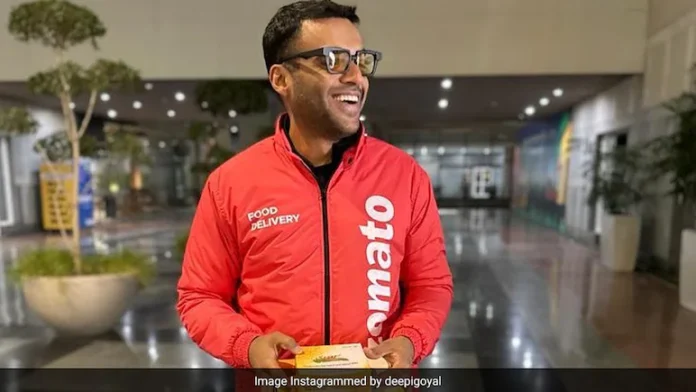

When Deepinder Goyal invited former employees of Zomato to consider returning to the company, he likely anticipated interest. What he did not expect was a flood of more than 8,000 emails within a week a response that underscores both the emotional connection many ex-employees still feel toward the food delivery giant and the evolving culture of India’s tech ecosystem.
On Wednesday, Goyal revealed that his inbox had been overwhelmed after he publicly reached out to former colleagues, encouraging them to “come back” to what is now known as Eternal Limited the rebranded parent entity of Zomato.
According to Goyal, around 4,000 of the emails came from alumni who had previously worked at the company over its nearly two-decade journey. The remaining messages were from individuals who had never been employed by the firm but were inspired enough by the outreach to apply anyway.
The scale of the response highlights the unusual nature of the invitation. In the startup world, exits are often viewed as permanent either a stepping stone to the next opportunity or a departure triggered by strategic differences. Goyal’s public acknowledgment that former employees could return and that leadership mistakes may have contributed to earlier exits represents a notable shift in tone.
A Founder Facing His Own Inbox
In a post shared on social media, Goyal described the emails as deeply personal. Many, he said, contained candid reflections spanning five, ten, or even fifteen years of shared history. The challenge, however, is practical.
“The only person who can truly read these emails and know who to respond to is me,” he wrote, pointing out that much of the company’s current leadership team may not have worked alongside employees who left in the early years.
But reviewing 8,000 emails is no small task even for a founder known for hands-on involvement. Acknowledging that it is “not humanly possible” to respond promptly to such a volume of correspondence, Goyal offered an unconventional alternative: former colleagues who had worked closely with him could find his personal number and message him directly on WhatsApp.
The move, while informal, reflects the culture that shaped Zomato in its early days one where access to leadership was often direct and hierarchical barriers relatively thin.
Rebranding and Recalibration
The timing of the outreach is significant. In 2024, Zomato rebranded its corporate parent entity to Eternal Limited, signalling a broader strategic identity beyond food delivery. The company now operates across multiple verticals, including Blinkit (quick commerce), Hyperpure (B2B food supply), and District (events and going-out services).
The rebranding was positioned as a structural evolution, reflecting the company’s diversification and long-term ambitions. Around the same time, Goyal stepped down from his role as Group CEO, transitioning to Vice Chairman to focus on long-term strategic initiatives.
Despite stepping away from day-to-day executive operations, Goyal remains closely associated with the company’s culture and direction. His outreach to alumni appears to be part of a broader recalibration — an effort to rebuild institutional memory and stabilise internal systems after years of rapid expansion and market volatility.
An Emotional Undercurrent
The volume and tone of the responses suggest that Zomato’s early culture left a lasting imprint. Many former employees, according to Goyal, wrote with honesty and emotional depth. Some recounted the chaos of startup growth, others referenced shared milestones and challenges.
India’s startup sector has matured significantly over the past decade, shifting from hypergrowth-at-all-costs models to a greater emphasis on operational discipline and sustainable profitability. Zomato itself has navigated intense competition, public listing pressures, regulatory challenges, and expansion into adjacent sectors.
Goyal has previously acknowledged that parts of the company’s journey were marked by turbulence including leadership churn and shifting organisational structures. His recent messaging suggests a desire to create a “less chaotic” environment for those considering a return.
That candour may have resonated.
A Rare Corporate Gesture
Corporate re-entry campaigns are not unheard of globally, but they are relatively rare in India’s startup ecosystem, where attrition has historically been seen as part of the growth cycle.
By publicly inviting alumni back, Goyal appears to be reframing exits not as failures but as chapters in a longer professional relationship. The gesture signals openness to institutional continuity and perhaps recognition that the next phase of growth requires a blend of fresh talent and seasoned insiders.
It also underscores the personal branding power of founders in Indian tech. Even as companies professionalise and diversify, founders often remain symbolic anchors of identity and trust.
What Comes Next
Whether all 8,000 emails translate into re-hires is uncertain. Recruitment decisions will ultimately depend on strategic fit, current organisational needs, and evolving business priorities.
However, the episode reveals something deeper about India’s startup landscape: cultural capital matters. For many former employees, the opportunity to return is not just about compensation or designation, but about unfinished narratives and shared ambition.
As Eternal Limited continues to expand across food delivery, quick commerce, and digital services, the company faces both market competition and internal cultural consolidation. Goyal’s outreach and the extraordinary response suggests that alumni networks may play a larger role in that evolution than previously assumed.
For now, one of India’s most recognisable tech founders finds himself doing something decidedly un-corporate: asking old colleagues to WhatsApp him.