





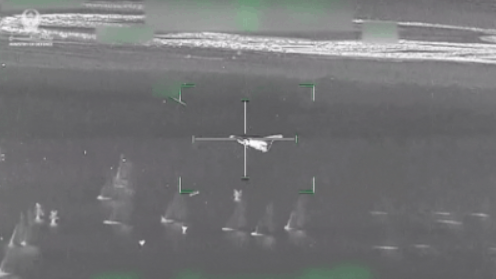

The United Arab Emirates has released footage showing its air force intercepting and destroying multiple Iranian drones that attempted to approach the Gulf nation, highlighting the growing role of advanced air defence systems in the escalating conflict across the Middle East.
The video, shared by the UAE Ministry of Defence on social media platform X, captured several aerial interception operations carried out by the country’s armed forces. According to the ministry, combat helicopters and air defence systems were deployed to neutralise the incoming unmanned aerial vehicles before they could reach critical infrastructure.
Officials described the operation as part of the UAE’s ongoing efforts to defend its sovereignty and protect civilian and strategic assets in the region.
“Footage showing the UAE’s air defences intercepting and destroying Iranian UAVs that attempted to target the country,” the defence ministry said in its statement accompanying the video.
The ministry emphasised that national security remains a top priority.
“There is no compromise when it comes to the nation’s security and sovereignty. The UAE Armed Forces stand ready to deter any threat,” the statement added.
Drone Barrage Amid Regional Conflict
The interception comes amid intensifying hostilities in the Middle East, where Iran has launched waves of ballistic missiles and drones targeting locations across the Gulf.
According to UAE defence authorities, Iran fired at least 16 ballistic missiles and more than 117 drones during a recent barrage linked to the broader regional conflict.
Most of these aerial threats were intercepted before reaching their intended targets, officials said. However, four drones reportedly landed on UAE territory, underscoring the persistent risks posed by unmanned aerial systems in modern warfare.
The drones involved in these attacks are believed to include Shahed-136 loitering munitions, one of Iran’s most widely deployed drone platforms.
The Shahed-136 is designed as a one-way attack drone that loiters over a target area before striking and exploding on impact. Because of its relatively low cost and ability to travel long distances, the drone has become a key element in Iran’s asymmetric military strategy.
These drones have increasingly been used to target military installations, oil facilities, and strategic infrastructure across the Gulf region.
Patriot Systems and Western Defence Technology
To counter these threats, the United States and its regional allies have relied heavily on advanced air defence systems, particularly the Patriot missile defence system.
UAE defence officials say interception rates have exceeded 90 percent, demonstrating the effectiveness of the layered defence network deployed across the region.
However, the increasing reliance on missile defence systems has also highlighted a growing strategic challenge.
Military analysts note that the cost of intercepting drones can far exceed the cost of the drones themselves.
A typical Shahed-136 drone is estimated to cost around $20,000, while the interceptor missiles used to destroy them can cost up to $4 million each.
This disparity has created what defence planners call an economic imbalance in air defence, where defending forces must spend significantly more resources to neutralise relatively inexpensive threats.
Even when interception rates remain high, the financial and logistical burden on defending nations continues to grow.
Apache Helicopters in Drone Defence
The UAE has also deployed its fleet of Apache attack helicopters to support air defence operations against drones.
The country has operated Apache helicopters since the early 1990s and has progressively upgraded its fleet over the decades.
Initially fielded in the AH-64D configuration, the helicopters have since been modernised to the AH-64E Guardian standard, one of the most advanced versions of the aircraft.
The Apache is equipped with a 30-millimetre M230 chain gun, AGM-114 Hellfire guided missiles, and 70-millimetre rockets, making it highly versatile in both ground attack and aerial interception missions.
In recent years, military planners have explored expanding the Apache’s capabilities to counter unmanned aerial systems.
Testing conducted at the Yuma Proving Ground in Arizona demonstrated the helicopter’s ability to engage drones using proximity-fused ammunition.
During live-fire exercises, Apache helicopters successfully conducted air-to-air engagements against unmanned aerial systems using advanced munitions designed to detonate near aerial targets.
One such round, known as the XM1225 APEX (Aviation Proximity Explosive) ammunition, was developed specifically to counter drones, exposed infantry positions, and small maritime threats.
The round can be fired from the Apache’s existing M230 gun system without requiring major modifications to the helicopter’s weapons platform or fire-control system.
Extensive testing is ongoing to ensure operational reliability and safety under combat conditions.
A New Era of Drone Warfare
The rising use of drones in conflicts across the Middle East reflects a broader shift in modern warfare.
Low-cost unmanned systems are increasingly being deployed by both state and non-state actors, allowing militaries to strike targets at long distances while reducing risks to personnel.
For countries like the UAE, defending against these threats requires a combination of missile defence systems, aerial patrols, electronic warfare capabilities, and advanced intelligence.
As the regional security situation remains volatile, Gulf nations are continuing to invest heavily in drone defence technologies and integrated air defence networks.
The UAE’s recent operations against Iranian drones illustrate how modern conflicts are increasingly shaped by the race between inexpensive attack drones and sophisticated defensive systems.
With tensions showing little sign of easing, the battle between drones and air defences is likely to remain a defining feature of the region’s security landscape.