





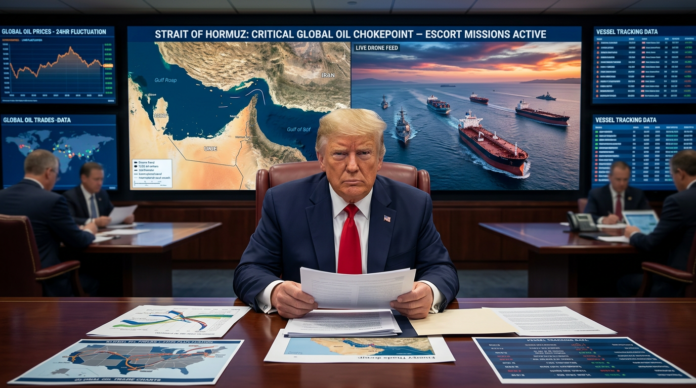

U.S. President Donald Trump has suggested he may postpone a planned diplomatic visit to China later this month as tensions surrounding the Strait of Hormuz continue to escalate amid the ongoing conflict with Iran. The potential delay reflects Washington’s growing efforts to persuade Beijing to help stabilize one of the world’s most critical energy shipping routes.
In an interview with the Financial Times, Trump said the United States wants clarity on whether China would support a multinational effort aimed at protecting oil tanker traffic passing through the strategically vital strait. The waterway, which connects the Persian Gulf to global markets, carries a significant share of the world’s crude oil shipments.
“We’d like to know,” Trump said when asked whether China would join the coalition. “We may delay,” he added, indicating that the outcome of these discussions could influence whether his visit to Beijing proceeds as scheduled.
Rising Geopolitical Stakes
The debate over securing the Strait of Hormuz has intensified following recent military strikes by the United States and Israel on Iranian targets. Those operations have sharply heightened regional tensions and raised concerns about potential disruptions to global oil supplies.
The strait is widely considered one of the most important maritime chokepoints for global energy trade. Any prolonged disruption could have immediate consequences for international oil markets, sending prices higher and increasing pressure on governments around the world.
Trump’s remarks signal a shift in tone from earlier statements at the beginning of the Iran crisis, when he suggested that U.S. naval forces could escort commercial oil tankers through the strait if necessary. As oil prices have climbed and concerns about supply security have intensified, Washington has begun exploring the possibility of a broader international coalition to share the responsibility for protecting maritime traffic.
Diplomatic Balancing with Beijing
The potential postponement of Trump’s trip could also carry broader economic implications, particularly given the fragile state of U.S.–China relations.
Washington and Beijing have spent much of the past year locked in trade tensions, with both sides threatening tariffs on key imports. Although recent negotiations have led to a temporary truce preventing further tariff escalations, relations between the two economic superpowers remain sensitive.
Trump’s visit to China was expected to include a face-to-face meeting with Chinese President Xi Jinping, aimed at easing economic tensions and advancing trade discussions. Canceling or delaying the trip could complicate ongoing diplomatic efforts to stabilize relations between the two countries.
The White House has not issued an official statement regarding Trump’s comments or the status of the planned visit.
Trade Talks Continue in Paris
While uncertainty surrounds the presidential visit, economic diplomacy between the two countries is continuing.
On Monday, U.S. Treasury Secretary Scott Bessent met with Chinese Vice Premier He Lifeng in Paris for another round of trade negotiations. The discussions are widely viewed as a preparatory step toward Trump’s potential trip to Beijing and are intended to maintain the fragile economic truce currently in place.
Officials from both sides have signaled cautious optimism about avoiding a renewed tariff war, though the broader geopolitical tensions surrounding Iran and energy security could complicate those talks.
Coalition Proposal for Maritime Security
Speaking to reporters aboard Air Force One while returning to Washington, D.C. after a weekend in Florida, Trump said the United States has already approached several countries about participating in a naval effort to safeguard oil shipments in the Strait of Hormuz.
According to the president, discussions have been held with “about seven” nations regarding possible military support, though he declined to identify them.
Trump also suggested that China could play a significant role because of its heavy dependence on energy imports from the Middle East.
“China’s an interesting case study,” he said. “They rely heavily on oil from the region, so we asked whether they’d like to be involved. Maybe they will, maybe they won’t.”
Economic Pressures on Both Sides
The rising cost of oil has become a growing political concern in the United States, particularly as domestic fuel prices climb ahead of the upcoming midterm election season.
Higher oil prices often translate into increased gasoline costs for consumers, making energy security an important issue for policymakers in Washington.
China, meanwhile, faces its own economic challenges. The Chinese government recently revised its 2026 economic growth target downward to a range between 4.5 percent and 5 percent its slowest projected expansion in more than three decades.
A prolonged disruption in oil shipments through the Strait of Hormuz could therefore have significant consequences for Beijing’s economic outlook as well.
China Calls for Stability
A spokesperson for the Chinese Embassy in Washington offered a cautious response to Trump’s proposal, emphasizing the importance of maintaining stability in global energy supply chains.
“The Strait of Hormuz and nearby waters are vital routes for international trade and energy transportation,” the spokesperson said. “Ensuring security and stability in the region serves the shared interests of the international community.”
The statement also highlighted China’s position as a diplomatic partner in the Middle East, noting that Beijing intends to continue engaging with regional stakeholders in efforts to reduce tensions and promote peace.
As geopolitical uncertainty persists, the future of Trump’s China visit and the prospects for an international coalition to secure the Strait of Hormuz remain closely tied to the evolving dynamics of the Iran conflict and global energy markets.