





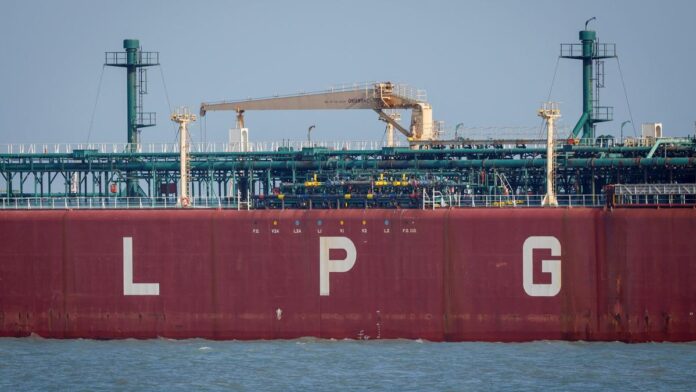

Amid escalating tensions in the Gulf region, the Indian Navy has stepped up efforts to secure vital maritime routes by escorting Indian-flagged merchant vessels through high-risk waters near the Strait of Hormuz. The move comes as concerns grow over the safety of commercial shipping in one of the world’s most strategically important energy corridors.
According to official sources, three naval warships were deployed to escort merchant vessels including Shivalik, Nanda Devi, and Jag Laadki as they navigated through the Gulf of Oman after crossing the Strait of Hormuz. The operation ensured safe passage for the vessels amid a volatile security environment marked by recent attacks and heightened geopolitical tensions.
Strategic Escort Operation
The naval deployment is part of Operation Sankalp, a long-standing mission launched in 2019 to protect India’s maritime interests and guarantee the security of its merchant fleet in the Gulf region. The operation has been particularly critical during periods of instability, including earlier attacks attributed to regional militant groups.
Although officials declined to disclose the specific warships involved in the latest escort mission, they confirmed that naval assets remain actively deployed in the region to respond swiftly to emerging threats.
Narrow Escape for Oil Tanker
One of the escorted vessels, Jag Laadki, was carrying over 80,000 metric tonnes of crude oil and had recently departed from the Fujairah terminal in the United Arab Emirates. The ship narrowly avoided danger when the terminal came under attack during its loading operations.
Despite the incident, the vessel continued its journey under naval protection and is expected to reach Mundra Port safely. Officials emphasized that such escort missions are essential to maintaining uninterrupted energy supplies and protecting Indian commercial interests.
Meanwhile, LPG carrier Shivalik successfully arrived at Mundra Port earlier this week, while Nanda Devi is expected to dock at Kandla Port. Together, the vessels are transporting more than 90,000 metric tonnes of cargo, underscoring the scale and importance of these shipments.
Ensuring Maritime Stability
Government officials have reiterated that naval escorts for Indian-flagged vessels will continue as long as the security situation remains uncertain. Currently, around 22 Indian ships are reportedly stranded west of the Strait of Hormuz, awaiting safe transit.
Speaking at an inter-ministerial briefing, senior officials confirmed that all crew members aboard the escorted vessels are safe. Measures have also been implemented at Indian ports to ensure smooth cargo handling upon arrival, including priority berthing and expedited documentation processes.
Authorities further noted that there is no congestion at major ports, with container volumes at the Jawaharlal Nehru Port Authority showing a significant decline. Ports across the country have also been instructed to provide secure anchorage for vessels unable to proceed due to regional instability.
Energy Supply and Economic Concerns
The evolving situation has raised concerns about the continuity of energy supplies, particularly liquefied petroleum gas (LPG), which remains critical for domestic consumption. However, officials from the Ministry of Petroleum and Natural Gas have assured that supplies remain stable despite logistical challenges.
They added that domestic LPG production has increased significantly in recent months, helping offset potential disruptions. While cooking gas remains an area of concern, no shortages have been reported at the distribution level so far.
Diplomatic Position
On the diplomatic front, India has maintained a cautious stance regarding broader international efforts to secure maritime routes in the region. Responding to reports that Donald Trump had urged countries to deploy warships to safeguard shipping lanes, officials clarified that the matter has not been discussed in any bilateral context.
External Affairs Ministry spokesperson Randhir Jaiswal stated that while India is aware of ongoing international discussions, its actions are guided by national interests and independent assessments of the situation.
Growing Regional Uncertainty
The Persian Gulf region, particularly areas west of the Strait of Hormuz, has witnessed increased hostilities in recent weeks. While the Gulf of Oman lies to the east of the strait, it has not remained immune to incidents, with sporadic attacks raising alarm among global shipping operators.
Given that a significant portion of the world’s oil supply passes through these waters, any disruption can have far-reaching economic consequences. For India, which relies heavily on energy imports, ensuring the safety of shipping routes is a strategic priority.
Continued Vigilance
As tensions persist, the Indian Navy’s proactive deployment reflects a broader commitment to safeguarding trade routes and protecting national interests beyond its immediate coastline. Analysts note that such operations not only secure cargo but also reinforce India’s presence in a geopolitically sensitive region.
With multiple vessels still awaiting safe passage and uncertainties continuing to loom, naval escorts are expected to remain a critical component of India’s maritime security strategy in the coming weeks.