





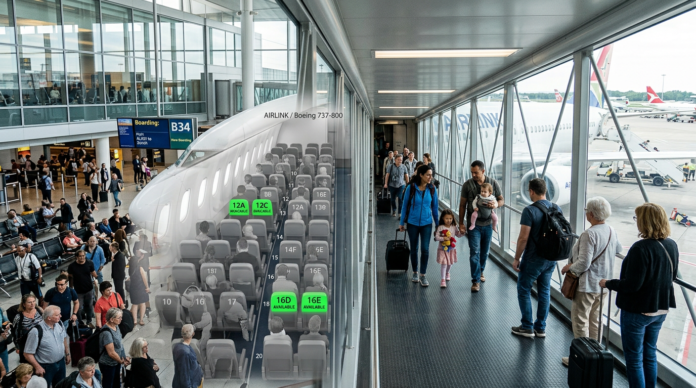

In a major move aimed at improving passenger experience and curbing hidden charges, the Ministry of Civil Aviation has directed airlines to ensure that at least 60% of seats on every flight are offered free of selection charges. The decision is expected to bring significant relief to millions of air travelers who have long complained about additional fees for choosing seats.
The directive comes amid growing public criticism over what many passengers describe as “unfair pricing practices,” where airlines charge extra for basic services such as selecting window or aisle seats. These charges, often added at the final stage of booking, have been a consistent source of frustration for flyers.
Tackling Hidden Costs in Air Travel
Currently, most airlines follow dynamic seat pricing models, where passengers are required to pay additional fees for preferred seats. Window seats, aisle seats, and those offering extra legroom are typically priced higher, leaving only a limited number of free seats usually middle seats located toward the rear of the aircraft.
Under the new guidelines, airlines must ensure that a majority of seats at least 60% are made available without any selection fee. While premium seating options may still carry charges, the move aims to strike a balance between airline revenue models and passenger rights.
Officials believe this step will bring greater transparency to ticket pricing and prevent last-minute cost escalations during booking.
Families and Groups to Sit Together
In another passenger-friendly measure, the aviation regulator, Directorate General of Civil Aviation (DGCA), has instructed airlines to seat passengers traveling on the same booking identified by a common Passenger Name Record (PNR) together whenever possible.
Airlines have been asked to prioritize allocating adjacent seats to families and groups without imposing additional charges. This addresses a long-standing issue where passengers traveling together often find themselves seated apart unless they pay extra for seat selection.
Such situations frequently lead to uncomfortable negotiations among passengers onboard, sometimes escalating into arguments before take-off. The new directive is expected to minimize such disruptions and enhance overall passenger comfort.
Strengthening Passenger Rights
The government has also emphasized the need for airlines to clearly communicate passenger rights in cases of flight delays, cancellations, or denied boarding. Airlines are now required to prominently display this information across all customer touchpoints, including websites, mobile apps, ticket booking platforms, and airport counters.
Additionally, the DGCA has asked airlines to provide this information in regional languages to improve accessibility for a broader section of travelers.
Officials noted that awareness of passenger rights remains relatively low, and clearer communication will empower travelers to make informed decisions and seek appropriate compensation when necessary.
Transparent Policies for Special Items
Another key aspect of the new guidelines focuses on standardizing airline policies regarding the carriage of special items such as sports equipment, musical instruments, and pets.
Passengers have often raised concerns about inconsistent rules and high charges imposed by different airlines for carrying such items. To address this, airlines have been directed to adopt transparent, consistent, and passenger-friendly policies while ensuring compliance with safety and operational requirements.
By reducing ambiguity and improving communication, the government aims to make air travel more predictable and user-friendly.
Growing Aviation Market and Passenger Focus
India’s aviation sector has witnessed rapid expansion in recent years, emerging as one of the fastest-growing markets globally. The country is now the third-largest domestic aviation market, with Indian airports handling over five lakh passengers daily.
Given this scale, the government has reiterated that passenger convenience and satisfaction remain top priorities.
In line with this objective, several initiatives have been introduced to enhance the airport experience. These include affordable food outlets under the UDAN scheme, free Wi-Fi services at airports, and “Flybrary” facilities offering access to books for travelers.
Balancing Growth and Consumer Protection
While airlines have expressed concerns about revenue implications, officials maintain that the measures are necessary to ensure fair practices in a rapidly expanding market. The focus, they say, is on creating a more transparent and passenger-centric aviation ecosystem without compromising operational efficiency.
Industry experts note that as competition intensifies, airlines may need to rethink their pricing strategies and explore alternative revenue streams rather than relying heavily on ancillary charges.
What This Means for Travelers
For passengers, the changes are expected to simplify the booking process and reduce overall travel costs. The availability of free seat selection for a majority of seats will eliminate the pressure to pay extra for basic comfort.
At the same time, families and group travelers will benefit from more coordinated seating arrangements, making journeys more convenient and less stressful.
As these new norms come into effect, travelers can expect a more streamlined and transparent flying experience one that places greater emphasis on fairness, accessibility, and customer satisfaction.