





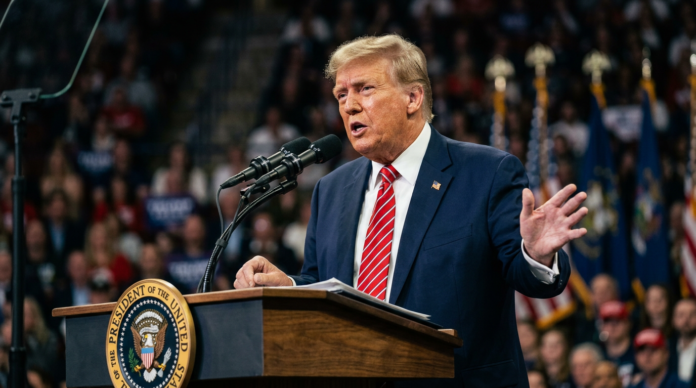

Iranian state-aligned media outlets reacted sharply after U.S. President Donald Trump announced a temporary pause on planned strikes targeting Iran’s power infrastructure, portraying the decision as a sign of Washington stepping back under pressure. The response from Tehran’s media ecosystem ranged from mockery to claims that Iran’s deterrence strategy had forced the United States to reconsider military action.
The five-day suspension of potential strikes was originally framed by Washington as a window for diplomacy. However, Iranian outlets quickly interpreted the move differently, arguing that the pause reflected growing U.S. hesitation in the face of escalating regional risks and economic consequences.
State-aligned broadcaster Press TV reported that no negotiations were underway between Tehran and Washington, either directly or through intermediaries. The channel cited a senior Iranian security official who claimed that Trump’s decision to halt strikes followed “credible military threats” from Iran and mounting financial pressure on Western economies.
According to the report, the official dismissed any suggestion of diplomatic progress, saying psychological pressure would neither reopen the Strait of Hormuz nor stabilize global energy markets. The same source argued that the five-day window merely delayed confrontation rather than reducing tensions, warning that Iran remained prepared to respond with full-scale defensive measures if attacks were launched.
Other Iranian media outlets echoed similar messaging. Mehr News Agency described the U.S. threat as a “bluff,” suggesting that recent attacks on energy infrastructure and Iran’s retaliatory posture had compelled Washington to reconsider. In social media posts, the agency claimed that Tehran’s military readiness had altered the strategic balance and forced the pause.
The Tehran Times adopted a more critical tone, characterizing the suspension as a retreat disguised as diplomacy. The publication argued that Washington had stepped back after realizing that escalation could place regional energy infrastructure at risk. It also questioned the effectiveness of ultimatums when both sides were preparing for further confrontation.
Iran’s state broadcaster Islamic Republic of Iran Broadcasting (IRIB) reinforced this narrative by linking the pause to Tehran’s warnings about energy grid retaliation. The broadcaster highlighted earlier statements suggesting that Iran could keep the Strait of Hormuz closed until damaged facilities were rebuilt and potentially target Israeli and regional infrastructure linked to U.S. interests.
IRIB commentary suggested that the temporary halt was not a gesture toward diplomacy but a tactical decision prompted by concerns over widening conflict. Analysts featured on state television emphasized that energy infrastructure across the region had effectively become part of the battlefield.
Political figures also weighed in. Ebrahim Rezaei, spokesperson for Iran’s National Security and Foreign Policy Commission, said in a social media post that the United States had “backed down again,” describing the pause as another example of deterrence working in Tehran’s favor. His remarks echoed the broader messaging across Iranian media that Washington had been compelled to step back.
The coordinated tone across outlets reflected a unified narrative: Iran’s deterrence posture had succeeded, and any escalation would remain reciprocal. Commentaries repeatedly emphasized that energy infrastructure, rather than traditional military targets, would continue to shape the trajectory of the conflict.
Despite the strong rhetoric, the diplomatic window created by the pause remains limited. Analysts note that five days offers little time for structured negotiations, particularly with multiple regional fronts still active. Ongoing military activity and heightened alert levels further complicate efforts to de-escalate tensions.
The uncertainty surrounding the Strait of Hormuz continues to dominate global attention. Even temporary disruptions in the narrow waterway can impact oil supply and shipping routes. Energy markets remain sensitive to developments, with traders closely monitoring statements from both Washington and Tehran.
Experts warn that public messaging from both sides may also serve strategic purposes. While Washington framed the pause as an opportunity for diplomacy, Tehran’s media response appears aimed at reinforcing domestic confidence and projecting strength. Such narratives often shape public perception even as behind-the-scenes communication may continue.
The broader conflict has already pushed regional tensions to new levels, with energy infrastructure emerging as a central pressure point. Military threats targeting power grids, refineries, and shipping lanes have raised concerns about wider economic fallout. The risk of miscalculation remains high, especially as both sides signal readiness for further escalation.
For now, the five-day pause has created a fragile moment of uncertainty rather than clarity. Iranian media portray it as a strategic victory, while U.S. officials describe it as an opportunity for diplomacy. Whether the window leads to de-escalation or renewed confrontation will depend on developments in the coming days.
As rhetoric intensifies and both sides maintain hardened positions, the temporary halt in strikes may only delay the next phase of the standoff. With energy markets on edge and regional actors closely watching, the situation remains fluid and highly volatile.