





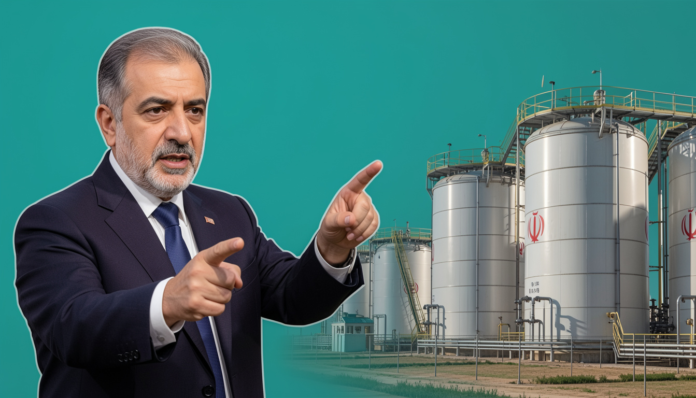

Iran has indicated that India will be allowed safe passage through the strategically critical Strait of Hormuz, even as tensions continue to disrupt maritime traffic in one of the world’s most important energy corridors. The development comes amid the ongoing regional conflict, which has sharply reduced shipping activity and triggered volatility in global oil and gas markets.
Iranian Foreign Minister Abbas Araghchi said Tehran had coordinated with several countries considered “friendly” to ensure their vessels could transit the strait. According to his remarks on state television, India, China, Russia, Pakistan, Iraq and Bangladesh were among those granted safe passage after diplomatic communication with Iranian authorities.
Araghchi emphasized that the waterway was not fully closed, countering widespread reports suggesting a complete shutdown. Instead, he described a selective access policy under which ships belonging to countries maintaining communication with Tehran could move through the strait under Iranian oversight.
“Many shipowners and governments contacted us requesting safe transit,” Araghchi said. “For friendly countries, or where coordination exists, our forces have provided passage.”
He added that at least two vessels linked to India had recently crossed the waterway following coordination with Iranian authorities.
The Strait of Hormuz connects the Persian Gulf to international shipping routes and handles roughly one-fifth of global oil supplies. Any restriction in traffic through the narrow corridor can significantly affect global energy prices, shipping insurance costs and supply chains. Since the escalation of hostilities last month, tanker traffic through the strait has dropped dramatically.
Iran has tightened control over maritime movement following military strikes by the United States and Israel. In response, Tehran increased surveillance, deployed drones and missiles, and warned that vessels linked to adversarial nations would not be allowed to pass. The policy effectively created a tiered access system, where some countries receive clearance while others face restrictions.
Araghchi made it clear that ships belonging to countries involved in the conflict or viewed as hostile would not be granted transit permission. He specifically referenced the United States, Israel and certain regional allies, stating that vessels linked to those nations would not be permitted to cross during the ongoing conflict.
“We are in a state of war,” he said, describing the region as an active conflict zone. “There is no reason to allow ships of our enemies and their allies to pass, but the strait remains open to others.”
The selective policy has already affected shipping movements. Earlier this week, Iranian authorities stopped a Pakistan-bound container vessel named SELEN near the entrance to the strait due to lack of authorization. The ship, which had departed from Sharjah in the United Arab Emirates, was forced to reverse course after failing to secure transit clearance, according to statements attributed to Iran’s Islamic Revolutionary Guard Corps.
Despite allowing passage for certain countries, overall traffic through the strait has declined sharply. Industry data indicates that daily shipping activity has fallen by approximately 95 percent since the conflict escalated. The dramatic drop reflects heightened risks, insurance challenges and uncertainty over safe transit.
Under normal conditions, the strait sees roughly 120 vessels per day, including crude oil tankers and liquefied natural gas carriers. However, recent analytics from maritime tracking firms suggest only a fraction of that volume has continued to operate. Between early March and late March, just over 150 crossings were recorded, with most vessels traveling eastward out of the Gulf.
The slowdown has triggered ripple effects across global markets. Reduced shipping has tightened supply expectations, pushing oil prices higher and raising concerns about fuel availability. Airlines, shipping companies and manufacturing industries are already reporting rising operational costs linked to higher energy prices and delayed cargo.
For India, continued access to the strait is particularly significant. The country relies heavily on crude imports from the Gulf region, and any prolonged disruption could affect domestic fuel prices and inflation. Analysts say Tehran’s assurance of safe passage for Indian-linked vessels may help mitigate immediate supply risks, though uncertainty remains.
Shipping companies remain cautious despite the selective clearance policy. Many operators are waiting for stronger guarantees and clearer navigation protocols before resuming normal operations. Insurance premiums for vessels entering the region have also surged, further discouraging traffic.
The situation remains fluid, with geopolitical developments likely to influence shipping patterns. While Iran’s decision to allow transit for certain nations signals limited de-escalation, broader restrictions continue to affect maritime flows.
Observers note that selective access also carries diplomatic implications. By permitting some countries while restricting others, Tehran appears to be leveraging control over the strait as a strategic tool. The approach allows Iran to maintain pressure while avoiding a complete shutdown that could trigger wider escalation.
As tensions persist, the Strait of Hormuz remains at the center of global attention. The combination of restricted traffic, selective passage and ongoing conflict has created an uncertain environment for energy markets and supply chains.
For now, Iran’s assurance to India and other countries offers partial relief. However, with shipping volumes still sharply reduced and risks elevated, the stability of this crucial maritime corridor remains uncertain.