





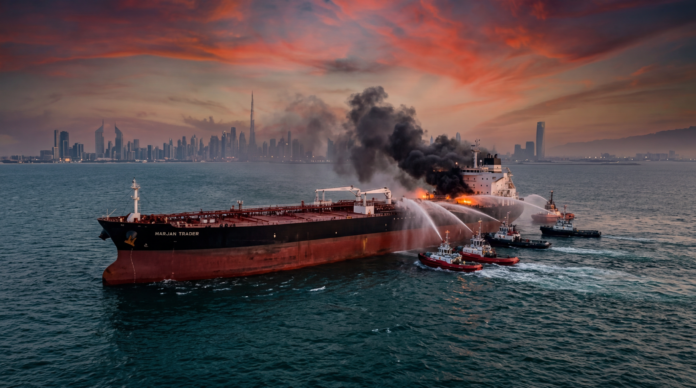

A fully loaded Kuwaiti crude oil tanker was damaged in a suspected Iranian strike near Dubai’s anchorage, triggering a fire onboard and raising concerns over a potential oil spill in one of the world’s busiest energy shipping corridors. Authorities confirmed that the blaze aboard the vessel, identified as Al Salmi, was extinguished and all crew members were safe, but the incident has intensified fears of escalating attacks on commercial shipping in the Gulf.
Kuwait Petroleum Corporation said the tanker was struck while anchored near Dubai port in the United Arab Emirates, causing damage to the hull and igniting a fire. Maritime firefighting teams responded quickly and managed to contain the blaze before it spread further. Officials said all 24 crew members onboard were unharmed, though damage assessment operations are ongoing.
The tanker was reportedly carrying around 2 million barrels of crude oil sourced from Kuwait and Saudi Arabia and was bound for Qingdao, China. The scale of the cargo heightened concerns among maritime authorities about a possible environmental impact if the vessel’s structure had been compromised. Officials said precautionary measures were initiated to monitor surrounding waters for signs of leakage.
The incident marks one of the most significant attacks on energy infrastructure in the Gulf since tensions escalated in the region. The strike is believed to have involved a drone, according to initial reports, though no group has formally claimed responsibility. Iranian officials did not immediately comment on the incident.
Why This Matters Now
The attack comes amid a broader escalation in maritime security risks across the Gulf and the Strait of Hormuz, a critical shipping lane through which a significant share of global oil exports passes. Since the outbreak of hostilities in the region, multiple commercial vessels have reported missile, drone, or projectile threats, raising alarm across global energy markets.
Energy traders reacted quickly to the latest incident. Brent crude futures jumped more than 2% in early Asian trading, briefly crossing $115 per barrel before easing later. Oil prices have surged sharply over the past month, with Brent on track for one of its largest monthly gains as geopolitical risks disrupt supply expectations.
The targeting of a fully loaded tanker near a major commercial hub such as Dubai has amplified concerns that the conflict could directly threaten energy shipments. Analysts warn that repeated incidents may push insurers to raise premiums for vessels operating in the region, increasing shipping costs and affecting global fuel prices.
The location of the strike is also significant. Dubai’s anchorage is considered a relatively secure zone compared to open waters. An attack there signals an expanded risk envelope, potentially impacting port operations and logistics planning for energy companies.
What Happened
According to maritime data, the Al Salmi tanker was stationary at Dubai anchorage when it was hit, sparking a fire onboard. Authorities deployed emergency response teams, including maritime firefighting units, which successfully extinguished the blaze. Investigators are now assessing structural damage and evaluating the risk of oil leakage.
Shipping intelligence data indicated the vessel was owned and operated by a subsidiary linked to Kuwait Petroleum Corporation. Officials said inspections would determine whether the tanker can continue its voyage or must be diverted for repairs.
Earlier the same day, another maritime incident was reported off the Saudi coast near Ras Tanura. A Greek-owned container ship reported two projectiles striking the water nearby within an hour of each other. The crew of that vessel was safe, but the incident reinforced concerns about heightened threats to commercial shipping.
Security analysts said these back-to-back events suggest increasing risks across Gulf shipping lanes. While no confirmed link between the incidents has been established, authorities are treating them as part of a broader security pattern.
What Happens Next
Damage assessment teams are continuing inspections of the tanker’s hull, cargo tanks, and safety systems. Environmental monitoring is also underway to detect any oil spill. Maritime authorities may issue updated navigation advisories for vessels operating near the UAE and Strait of Hormuz.
Shipping companies are expected to review routing decisions, while insurers may reassess risk premiums for vessels operating in the Gulf. Energy markets will also closely watch whether further incidents occur, which could drive additional price volatility.
Regional governments may increase naval patrols and surveillance around critical shipping routes. Security coordination between Gulf nations is likely to intensify, particularly around anchorage zones and major ports.
Who Is Impacted
The incident affects global energy markets, shipping companies, and oil-importing nations. Any disruption to Gulf shipping routes can influence fuel prices worldwide. Countries dependent on Middle East crude shipments are especially sensitive to such developments.
Oil traders, insurers, and logistics companies are also impacted, as increased risk raises operational costs. Environmental agencies are monitoring the situation due to potential spill risks. For port authorities, the incident underscores the importance of maritime security even in anchored zones.
While no injuries were reported, the attack highlights growing threats to commercial shipping. As geopolitical tensions persist, the safety of energy supply routes remains a critical concern for global markets.