





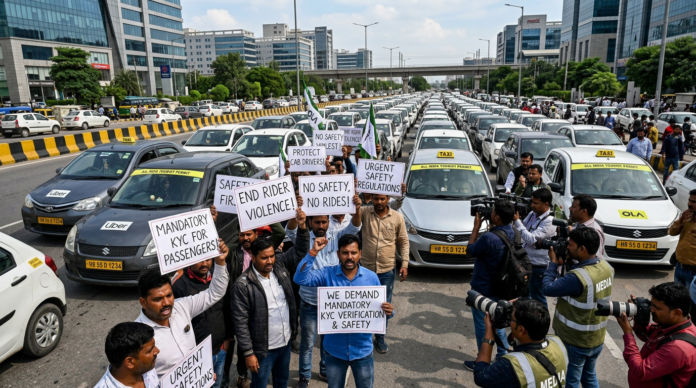

App-based cab services in Gurugram faced significant disruption on Monday as hundreds of drivers associated with ride-hailing platforms went on strike, demanding mandatory passenger verification and stronger safety mechanisms. The protest, led by driver groups and supported by gig workers, has affected services operated by major platforms including Uber and Ola, leaving commuters struggling with long wait times and limited ride availability.
Drivers gathered in multiple parts of the city over the weekend, including Sector 46, to voice concerns about safety risks and declining earnings. The strike follows growing frustration among drivers who claim they are increasingly vulnerable to assaults, threats, and non-payment incidents during trips. Protesters argue that while drivers undergo background verification before onboarding, passengers remain largely anonymous, creating a security imbalance.
The agitation gained momentum after the January 2026 killing of a 25-year-old cab driver, Suraj Singh, in Sector 37C. According to driver representatives, the victim was allegedly strangled by passengers during a robbery attempt. The incident has since become a rallying point for unions demanding accountability and stronger safeguards for gig workers.
Demand for Mandatory Passenger Verification
At the center of the protest is the demand for mandatory Know Your Customer (KYC) verification for riders. Drivers are calling for passengers to be verified using Aadhaar or other government-issued identification before booking rides. They argue that anonymous bookings allow individuals using fake profiles or unverified phone numbers to exploit the system.
Driver representatives say the absence of passenger verification creates risks, especially during late-night trips or rides to isolated locations. Many claim they have faced verbal abuse, threats, and even physical intimidation during trips. Without verified rider details, drivers say it becomes difficult to report incidents or seek accountability.
According to union members, verified passenger identities would discourage misconduct and help authorities trace offenders quickly in case of disputes. The proposal also includes displaying basic verified details to drivers before accepting rides.
Concerns Over Ineffective Safety Tools
Drivers also raised concerns about existing safety features in ride-hailing apps. While platforms provide SOS buttons and emergency alerts, many drivers claim these tools do not provide timely support. Some reported that emergency alerts often fail to trigger immediate assistance or connect them to local authorities quickly.
Drivers argue that safety systems should include real-time monitoring, quicker escalation channels, and dedicated helplines for drivers. They also demanded the option to flag problematic riders and block them from future bookings.
Lack of Grievance Redressal Mechanism
Another major issue highlighted during the protest is the absence of an effective grievance redressal system. Drivers claim that complaints against riders rarely receive follow-up action. Many said they receive automated responses without meaningful resolution.
Unions are demanding a structured reporting mechanism where driver complaints are reviewed promptly. They also want repeat offenders to face suspension from the platform. According to driver representatives, accountability should apply equally to both drivers and riders.
Economic Concerns Add to Protests
While safety remains the primary demand, some groups have also raised economic concerns. Drivers say rising fuel costs, maintenance expenses, and commission charges have significantly reduced earnings. Many are calling for a minimum base fare and revised pricing structures to ensure sustainable income.
Gig workers argue that declining incentives and increased competition have made it difficult to maintain profitability. Several drivers participating in the strike said they are working longer hours but earning less compared to previous years.
Impact on Commuters
The strike has disrupted daily commuting across key residential and commercial hubs. Users reported longer wait times, with ride bookings taking 10 to 15 minutes on average, compared to the usual one to two minutes. Availability has also dropped sharply, with frequent cancellations in high-demand areas.
Localities such as Sector 46, DLF Phase, and Sohna Road witnessed the most significant impact, as many commuters rely heavily on app-based mobility for office travel. Office-goers and students faced difficulties finding rides, while surge pricing was reported in some areas.
Platforms Yet to Respond
As of now, ride-hailing companies have not announced any immediate changes to passenger verification policies. However, sources indicate that discussions between driver unions and platform representatives may take place if the strike continues.
Experts say the protest highlights a broader debate around gig worker safety and platform accountability. With ride-hailing services becoming essential urban infrastructure, ensuring balanced safety measures for both drivers and passengers remains a key challenge.
For now, the strike underscores growing tensions within the gig economy. Drivers say they will continue demonstrations until platforms introduce mandatory passenger verification and improve safety mechanisms. Meanwhile, commuters in Gurugram are bracing for continued disruption if negotiations do not yield quick results.