





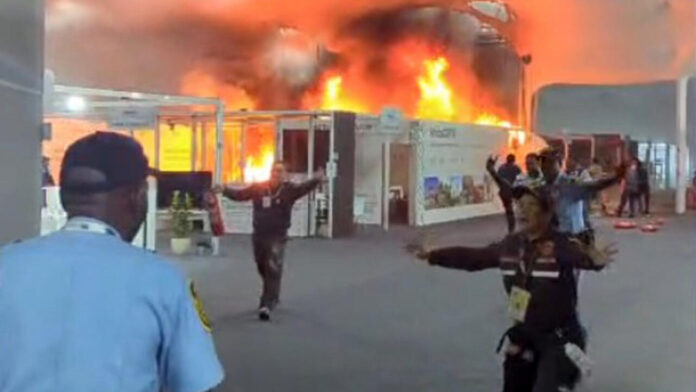

A sudden fire at the COP30 climate summit in Belém, Brazil, on Thursday sparked panic and forced thousands of delegates to evacuate, temporarily bringing global climate negotiations to a standstill. Officials say an electrical malfunction possibly involving a microwave may have triggered the blaze.
The fire erupted around 2 p.m. local time inside one of the exhibition pavilions, sending flames racing across fabric-lined walls and ceilings. Security footage captured the fire burning through the roof within minutes, while thick smoke quickly filled adjacent corridors. Delegates shouted “fire!” as they scrambled toward emergency exits amid blaring sirens.
Firefighters contained the blaze within six minutes, but not before 19 people were treated for smoke inhalation and two others for anxiety, according to Brazil’s COP30 presidency. Emergency crews rushed to the compound as smoke continued to billow from both temporary tents and permanent structures used by diplomats, journalists, and climate campaigners.
Authorities sealed off the affected area with tarps and later escorted delegates in small groups to collect personal belongings including passports needed for imminent travel.
The incident marks the third major disruption at COP30 since the summit opened last week. Earlier, Indigenous groups stormed the venue in protest and later blocked key entrances. In a joint statement, the Brazilian government and UN Climate Change officials said security teams “acted swiftly” and confirmed the fire had been fully contained.
The site was reopened after safety inspections at 8:40 p.m. local time.
The timing of the disruption could not be more sensitive. Negotiators are already struggling to resolve deep divides over fossil-fuel phase outs, climate finance, and global trade mechanisms. Brazil’s proposed roadmap for transitioning away from fossil fuels has met resistance from several blocs citing inadequate emission-cutting commitments and insufficient financial support for developing nations.
Earlier on Thursday, UN Secretary-General António Guterres cautioned that “the world is watching,” urging delegates to deliver an “ambitious compromise” before the summit concludes. He welcomed fresh calls to clarify how nations intend to collectively steer away from fossil-fuel dependence.
With less than 24 hours remaining before COP30’s scheduled close, nearly 200 countries are racing against time to strike a deal. As host, Brazil has stressed that a final agreement is crucial to converting years of climate pledges into tangible action.