





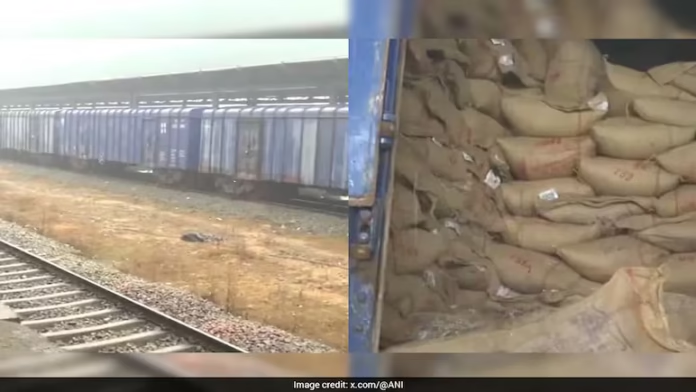

In a landmark moment for Jammu and Kashmir’s logistics and food security, the first-ever foodgrain freight train of the Food Corporation of India (FCI) reached the Anantnag Goods Terminal in south Kashmir on Sunday. The arrival formally connected the Kashmir Valley to India’s national freight rail network for the first time, a development officials described as historic and transformative.
The freight rake, carrying approximately 1,384 tonnes of rice, was dispatched from Ajitwal Railway Station in Punjab and reached Anantnag without disruption. The train consisted of 21 BCN wagons and marked the beginning of regular rail-based movement of essential commodities into the Valley.
Officials said the milestone would significantly improve the efficiency, reliability, and affordability of foodgrain supply to Kashmir, especially to remote and far-flung regions that often face logistical challenges.
Lieutenant Governor Hails ‘Long-Cherished Dream’
Jammu and Kashmir Lieutenant Governor Manoj Sinha congratulated the Indian Railways and all agencies involved in executing the operation. He called the arrival of the train a “very memorable occasion” and a realisation of a long-standing aspiration for the region.
“This moment fulfils our long-cherished dream of connecting the Kashmir region to the national freight network,” Sinha said. He added that the development would strengthen food security and ensure timely availability of essential commodities across the Valley.
Officials from Northern Railway’s Jammu division also termed the operation a major breakthrough in freight connectivity. They said the successful arrival of the train demonstrated the operational readiness of the Anantnag Goods Terminal for large-scale freight handling.
Boost to Food Security and Supply Chain Efficiency
Authorities said rail-based transportation would help ensure an uninterrupted and efficient supply of foodgrains to Jammu and Kashmir. Until now, the movement of foodgrains into the Valley relied heavily on road transport, which often faces disruptions due to weather conditions, landslides, or security restrictions.
With the introduction of freight rail services, the Food Corporation of India can now move buffer stocks faster and in larger volumes. Officials noted that rail transport would also reduce dependency on long and costly road convoys.
“Rail-based movement improves reliability and significantly lowers transportation costs,” an official spokesperson said. “It makes the supply chain more economical and predictable.”
The improved logistics system is expected to play a critical role during winters, when road connectivity to the Valley frequently remains disrupted for extended periods.
Economic Impact and Local Benefits
Beyond food security, officials said the new freight facility would provide a major boost to the local economy. The Anantnag Goods Terminal opens up fresh opportunities for trade, logistics, and allied services in south Kashmir.
Authorities expect the development to strengthen local markets by ensuring timely arrival of essential goods and stabilising prices. Over time, expanded freight operations could also support the movement of agricultural produce and other commodities out of the Valley.
“The commissioning of this terminal creates new economic possibilities,” the spokesperson said. “It will generate employment, encourage private logistics activity, and integrate local producers more closely with national markets.”
Gateway for Future Freight Expansion
Railway officials said the successful operation marks only the beginning of expanded freight services in Kashmir. The Anantnag Goods Terminal is expected to handle a wider range of goods in the future, including construction materials, consumer goods, and agricultural inputs.
The integration of Kashmir into India’s freight rail grid aligns with broader infrastructure initiatives aimed at improving regional connectivity and economic integration. Officials said similar freight operations could soon be extended to other parts of the Valley as demand and capacity grow.
A Symbolic and Strategic Milestone
The arrival of the first foodgrain freight train carries both symbolic and strategic importance. It signals a shift toward modern, resilient logistics infrastructure in Jammu and Kashmir and reflects the growing emphasis on long-term economic stability in the region.
Officials said the operation showcased effective coordination between the Food Corporation of India, Indian Railways, and local administration. They expressed confidence that rail freight services would soon become a backbone of essential commodity movement into the Valley.
As Kashmir takes this significant step into the national freight network, authorities believe the move will not only secure food supplies but also pave the way for broader economic growth and connectivity in the years ahead.