





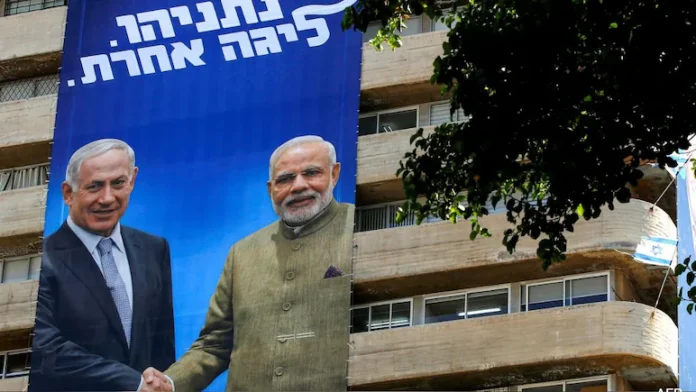

Prime Minister Narendra Modi is set to undertake a significant diplomatic visit to Israel from February 25 to 26, marking his second trip to the country and his first since beginning his third term in office. Nearly nine years after his landmark 2017 visit the first by an Indian prime minister the upcoming trip is expected to deepen strategic ties and expand cooperation into new technological and security domains.
The visit comes at a delicate moment in West Asian geopolitics, with ongoing regional tensions and shifting alliances shaping diplomatic priorities. Against this backdrop, New Delhi and Jerusalem appear poised to elevate their partnership beyond traditional defence cooperation toward a broader framework spanning artificial intelligence, innovation, agriculture, water security, and advanced manufacturing.
A Rare Address to the Knesset
One of the most anticipated moments of the visit will be Prime Minister Modi’s expected address to the Knesset, Israel’s parliament. The opportunity is considered a significant diplomatic honour and underscores the political warmth between the two democracies.
Former President Pranab Mukherjee addressed the Knesset in 2015 during the first-ever visit by an Indian head of state to Israel. Modi’s speech, however, will carry added weight given the strategic expansion of ties since 2017. Officials suggest the address may outline a forward-looking vision of cooperation rooted in democratic values, technological innovation, and shared security interests.
Expanding the Strategic Agenda
Prime Minister Modi is scheduled to hold bilateral talks with Israeli Prime Minister Benjamin Netanyahu, with both sides expected to formalize agreements across multiple sectors.
Defence collaboration will remain central. Israel has long been among India’s key suppliers of advanced military systems, ranging from missile technology to surveillance equipment. The relationship has grown steadily over the past decade, with increasing emphasis on joint research and co-development rather than simple procurement.
Sources familiar with the agenda indicate discussions may include cooperation on anti-ballistic missile defence systems, directed-energy weapons such as laser-based defence platforms, long-range precision munitions, and next-generation unmanned aerial systems. These initiatives align with India’s “Atmanirbhar Bharat” (self-reliance) push in defence manufacturing and Israel’s reputation for high-end military innovation.
In August 2025, Prime Minister Netanyahu publicly acknowledged the effectiveness of Israeli equipment supplied to India during Operation Sindoor a four-day conflict involving cross-border tensions with Pakistan. The reference underscored the operational depth of defence ties between the two nations.
Beyond defence, technology cooperation is expected to feature prominently. Israel’s growing participation in India’s AI initiatives including a strong delegation presence at the AI Impact Summit in New Delhi — highlights shared interest in artificial intelligence applications across defence, healthcare, agriculture, and cybersecurity.
Trade, Innovation and Agriculture
Trade relations between the two countries have expanded significantly since diplomatic ties were normalized in 1992. Bilateral trade, excluding defence, now spans sectors such as diamonds, chemicals, pharmaceuticals, agriculture technology, and water management solutions.
Agricultural cooperation remains one of the quiet success stories of the relationship. Israeli drip irrigation and water-conservation technologies have been deployed across multiple Indian states, boosting productivity in water-scarce regions. New agreements are expected to scale up such collaborations.
Commerce and Industry Minister Piyush Goyal’s recent visit to Israel, along with External Affairs Minister S. Jaishankar’s diplomatic outreach, laid groundwork for advancing economic engagement. Analysts suggest that discussions could also revisit the long-pending India-Israel Free Trade Agreement negotiations.
The Personal Chemistry Factor
Observers note that the personal rapport between Prime Ministers Modi and Netanyahu has often accelerated bilateral momentum. Netanyahu’s six-day visit to India in 2018 was marked by high visibility public engagements and symbolic gestures highlighting cultural and strategic affinity.
A planned visit by Netanyahu to India in December 2025 was postponed and later cancelled, but subsequent conversations between the two leaders reaffirmed mutual commitment to sustained engagement. Netanyahu’s invitation to Modi this year reflects that continuity.
In a public statement, Netanyahu described India and Israel as “a powerful alliance between two global leaders,” rooted in innovation and shared security interests. Modi responded by emphasizing that India values its “enduring friendship with Israel, built on trust, innovation and a shared commitment to peace and progress.”
Strategic Timing in a Volatile Region
The visit unfolds amid ongoing instability in parts of West Asia. India has carefully balanced its relations with Israel and key Arab partners, particularly within the framework of the I2U2 grouping (India, Israel, UAE, United States), which focuses on economic and technological cooperation.
Analysts believe Modi’s visit aims to reinforce India’s image as a stable, technology-driven power capable of maintaining strategic autonomy while engaging diverse regional stakeholders.
By combining parliamentary symbolism with concrete policy agreements, the trip is expected to signal a maturation of India-Israel relations from transactional defence purchases to a multi-dimensional strategic partnership.
As both countries navigate an increasingly uncertain global environment, the visit could help chart a long-term roadmap centered on innovation, resilience, and shared democratic values.