






At a time when the ongoing conflict involving United States, Israel and Iran has triggered anxieties over global oil flows, the Indian government has stepped in to calm nerves. The Ministry of Petroleum and Natural Gas on Thursday asserted that the country’s energy supply remains robust, with sufficient reserves to meet demand for “many months.”
The reassurance comes against the backdrop of rising concerns over disruptions in the Strait of Hormuz, a narrow but critical passage through which a significant portion of the world’s crude oil supply flows. While any instability in this region typically sends shockwaves through global energy markets, India appears to have insulated itself, at least in the short to medium term.
Government officials emphasized that India currently maintains around 74 days of total reserve capacity, with approximately 60 days of actual stock cover when factoring in crude oil, refined petroleum products, and strategic reserves stored in underground caverns. More importantly, procurement for the next two months has already been secured, reducing immediate vulnerability to external shocks.
This moment of reassurance was prompted not just by global developments, but also by domestic reactions. Isolated instances of panic buying were reported at select fuel stations, driven largely by viral social media content suggesting an impending shortage. Authorities were quick to dismiss these claims as part of a “deliberate misinformation campaign,” stressing that supply chains remained fully operational even during temporary spikes in demand.
India’s position as the world’s fourth-largest refiner and fifth-largest exporter of petroleum products further strengthens its case. The country sources crude oil from over 41 suppliers globally, ensuring diversification that reduces dependence on any single route or region. In fact, officials noted that current inflows of crude oil exceed previous volumes routed through the Strait of Hormuz, underscoring the resilience of India’s procurement strategy.
On the domestic front, oil marketing companies have been working round the clock to maintain steady supplies. Fuel depots reportedly operated overnight in response to localized surges, ensuring that consumers were not left stranded. The message from the Centre is clear: supply is not just adequate, but actively managed to prevent disruption.
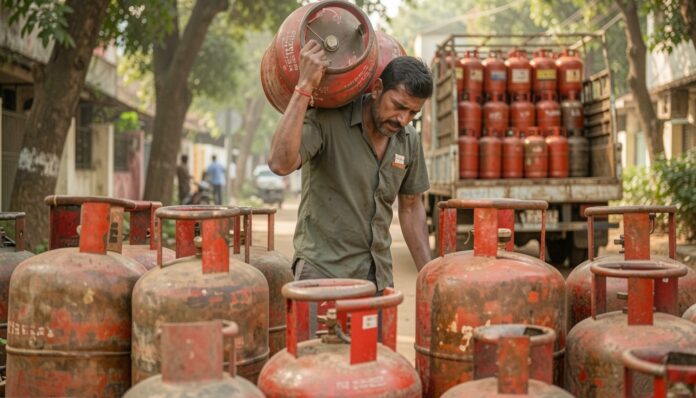
The situation surrounding Liquefied Petroleum Gas (LPG) also reflects a similar pattern of precaution and preparedness. Domestic refinery production has been ramped up by 40%, pushing daily output to 50 thousand metric tonnes against a requirement of roughly 80 thousand metric tonnes. While imports continue to bridge the gap, officials confirmed that at least one month of LPG supply is firmly secured, with additional shipments in the pipeline.
Interestingly, the government highlighted a temporary surge in LPG demand, which peaked at nearly 89 lakh cylinders per day during the height of public concern. That figure has since stabilized to around 50 lakh cylinders daily, suggesting that panic-driven consumption is subsiding. Authorities reiterated that there is no shortage of LPG and warned against hoarding or unnecessary stockpiling.
Amid these developments, the Centre also addressed speculation around the growing push for Piped Natural Gas (PNG). Officials clarified that the expansion of PNG infrastructure is part of a long-term energy transition strategy aimed at affordability, convenience, and environmental sustainability not a response to any LPG shortfall.
What lies ahead will depend largely on how global tensions evolve. While India’s diversified sourcing strategy and strategic reserves provide a buffer, prolonged instability in key oil-producing regions could still influence prices and logistics. However, for now, the government’s confidence signals a stable outlook, backed by both planning and capacity.
For citizens, the immediate takeaway is straightforward: there is no need for alarm. The supply chain from crude imports to retail distribution remains intact. The larger story, however, is about how India is positioning itself in an increasingly uncertain global energy landscape balancing domestic demand with international volatility through strategic foresight.