





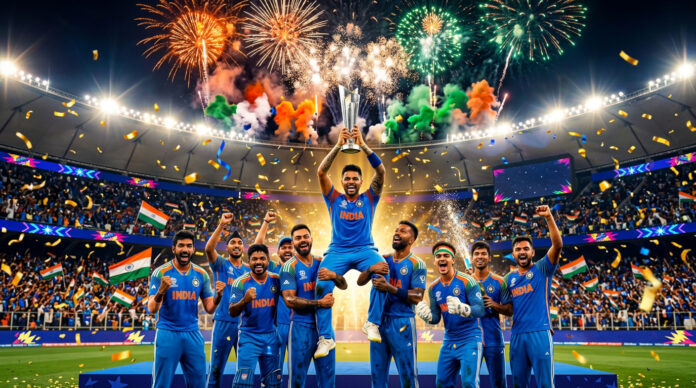

India’s latest T20 World Cup triumph was not just a victory built on talent it was the result of a bold tactical philosophy that transformed the way the team approached the shortest format of the game. The strategy, often described as India’s version of “Total T20,” emphasised aggressive batting, flexible roles, and multi-dimensional players, ultimately helping the team establish dominance in modern T20 cricket.
The concept draws inspiration from the famous football philosophy known as “Total Football,” popularised in the 1970s by Dutch coach Rinus Michels and later embraced by legendary players like Johan Cruyff. That system blurred positional boundaries, allowing defenders to attack and attackers to defend depending on the flow of the game.
India’s cricket team adopted a similar mindset in T20 cricket abandoning rigid roles and encouraging players to contribute across multiple facets of the game.
The Birth of India’s ‘Total T20’
India’s transition towards this attacking blueprint began after their T20 World Cup victory in 2024 under captain Rohit Sharma and head coach Rahul Dravid. That triumph laid the foundation for a new phase in Indian cricket, where the team embraced an aggressive, fearless style of play in the shortest format.
Since that victory, India’s T20 side has developed a reputation for relentless batting depth and tactical flexibility. Opponents entering matches against India often struggled to identify clear weaknesses in the lineup.
The team featured explosive openers, power hitters capable of accelerating the scoring rate until No. 8, and a bowling attack offering variety in pace and spin.
Even when rivals managed to challenge India’s dominance as South Africa did during the Super Eight stage the team’s ability to maintain scoreboard pressure often proved decisive.
England, for instance, came close to chasing down a daunting target of 254 in a dramatic semifinal clash in Mumbai. Yet the pressure of India’s massive total ultimately proved too much to overcome.
A Seamless Leadership Transition
One of the biggest challenges in Indian cricket has traditionally been managing transitions between generations of players. Moving on from iconic figures such as Rohit Sharma and Virat Kohli could have destabilised the team.
Instead, the transition was handled smoothly.
Under the new leadership combination of captain Suryakumar Yadav and head coach Gautam Gambhir, India’s T20 side continued to thrive. Since taking charge, the duo has guided India to multiple series victories, reinforcing the team’s dominance in the format.
The selectors made a decisive call by appointing Suryakumar popularly known as “SKY” as the T20 captain, prioritising tactical innovation and fearless batting over conventional hierarchy.
The message from the management was clear: the team would focus on specialised T20 skills rather than trying to balance across formats.
High-Risk, High-Reward Batting Philosophy
At the heart of India’s success lies a batting template built around calculated aggression.
The team prioritised scoring above-par totals when batting first, recognising that massive scores could neutralise variables such as toss advantage and dew conditions.
Players were encouraged to attack from the outset rather than adopt the traditional approach of consolidating during the early overs.
This meant the conventional “anchor role” where a batter preserves their wicket while building an innings was largely abandoned. Instead, the emphasis shifted toward impact players capable of changing the momentum of the game quickly.
Batters like Sanju Samson and Abhishek Sharma were given extended opportunities despite occasional low scores, as the management believed their aggressive approach aligned with the overall strategy.
The results were remarkable.
In the matches played since the 2024 T20 World Cup final, India frequently posted totals exceeding 200 when batting first. On several occasions, they even crossed the 250-run mark a testament to their relentless attacking intent.
Tactical Flexibility and Data-Driven Decisions
Although coach Gautam Gambhir has publicly stated that data alone cannot determine match outcomes, analytics still played a crucial role in India’s strategy.
The team used match-up data to decide batting orders and bowling combinations, ensuring that players were deployed in situations where they had the highest probability of success.
Spinners were sometimes introduced during powerplays, while certain batters were held back to exploit favourable match-ups later in the innings.
Another key aspect of the strategy involved prioritising multi-dimensional cricketers.
Instead of relying on specialists alone, the team favoured players who could contribute with both bat and ball.
All-rounders such as Axar Patel, Shivam Dube, and Hardik Pandya became central to the team’s balance, allowing India to maintain both batting depth and bowling variety.
This flexibility meant the team could adapt quickly to changing match conditions.
Building a New T20 Dynasty
The squad assembled under Gambhir and Suryakumar reflects a deliberate focus on players who excel specifically in the T20 format.
The lineup includes dynamic batters like Tilak Varma, Rinku Singh and Abhishek Sharma alongside proven match-winners such as Hardik Pandya and Sanju Samson.
Meanwhile, bowlers like Arshdeep Singh and Varun Chakravarthy provide crucial breakthroughs while maintaining control during high-scoring games.
The strategy prioritises players who embrace the fast-paced nature of T20 cricket rather than aspiring to long-format milestones.
For many in this generation, success in franchise leagues and international T20 tournaments defines their legacy.
India’s World Cup triumph has therefore become more than a single tournament victory.
It represents the beginning of a new era one where bold strategy, fearless execution and tactical innovation combine to redefine the team’s approach to the modern game.
If the current trajectory continues, India’s “Total T20” philosophy could well shape the future of T20 cricket worldwide.