





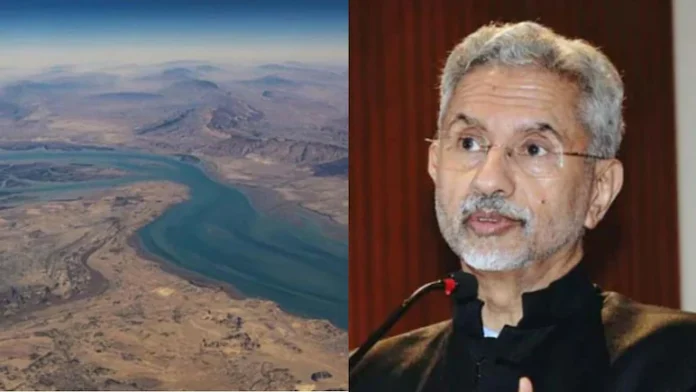

India’s diplomatic engagement with Iran has delivered an early breakthrough after two Indian-flagged liquefied petroleum gas (LPG) tankers successfully crossed the strategically sensitive Strait of Hormuz, even as regional tensions continue to disrupt global shipping routes.
External Affairs Minister S. Jaishankar confirmed that sustained dialogue with Tehran has produced results, allowing the tankers to transit the narrow maritime corridor that has become a geopolitical flashpoint following the ongoing conflict involving Iran, the United States, and Israel.
Speaking in an interview with the Financial Times, Jaishankar emphasized that India’s approach has been based on consistent engagement rather than transactional diplomacy.
“I am at the moment engaged in talking to them, and my talking has yielded some results. This is an ongoing process,” Jaishankar said, indicating that diplomatic channels remain active to ensure the safe movement of additional vessels.
Tankers Carrying Critical Energy Supplies
The two vessels Shivalik and Nanda Devi were transporting a combined cargo of nearly 92,700 metric tonnes of LPG when they crossed the Strait of Hormuz. Both tankers are expected to dock soon at India’s western ports, including Mundra Port and Kandla Port.
The successful passage of the ships comes at a time when shipping activity through the Strait has slowed dramatically due to the escalation of hostilities in the Middle East.
Iran has tightened oversight of maritime movement in the region following air strikes carried out by the United States and Israel earlier this year. Tehran’s retaliatory actions have raised concerns across global energy markets, particularly among Asian economies that rely heavily on Gulf energy exports.
No Special Deal, Says India
Despite the successful transit, Jaishankar clarified that India has not secured any blanket arrangement guaranteeing safe passage for its ships through the waterway.
“Every ship movement is an individual happening,” he explained, noting that negotiations must occur on a case-by-case basis depending on the circumstances surrounding each vessel.
He also rejected speculation that Iran received concessions from India in exchange for allowing the ships to pass.
According to the minister, the outcome reflects the long-standing diplomatic relationship between New Delhi and Tehran rather than any quid pro quo arrangement.
“India and Iran have a history of dealing with each other. That relationship is the basis on which I engaged,” he said.
Prime Minister Modi Steps In
India’s diplomatic outreach also included direct engagement at the highest political level.
Narendra Modi held discussions with Iranian President Masoud Pezeshkian to address concerns about the safe transit of Indian energy shipments and the security of Indian maritime personnel in the region.
The conversation focused on maintaining the uninterrupted flow of goods and energy supplies while avoiding further escalation in the volatile region.
India has thousands of seafarers working across commercial vessels operating in Gulf waters, making maritime safety a major strategic concern for New Delhi.
Why the Strait of Hormuz Matters
The Strait of Hormuz remains one of the world’s most critical maritime chokepoints. Nearly 20 percent of the global oil and natural gas trade passes through this narrow passage linking the Persian Gulf to the Arabian Sea.
Any disruption to traffic through the strait can have immediate ripple effects on global energy prices and supply chains.
For India, the stakes are particularly high. The country is among the largest importers of liquefied natural gas and LPG, with a significant portion of its energy supplies sourced from Middle Eastern producers.
The current crisis has therefore prompted India to closely monitor developments while maintaining diplomatic engagement with all stakeholders in the region.
Many More Ships Await Clearance
Despite the successful transit of the two LPG carriers, officials acknowledge that challenges remain.
Several Indian-linked vessels are still waiting to pass through the Strait amid the volatile security environment. Jaishankar indicated that discussions with Iranian authorities will continue as India works to ensure the safe passage of its remaining ships.
“These are still early days,” he said. “While this development is welcome, there is continuing conversation because there is continued work on that.”
The cautious optimism reflects India’s broader strategy of balancing diplomacy with pragmatic energy security concerns.
As tensions in the Middle East persist, New Delhi is likely to rely increasingly on diplomatic coordination to protect its maritime trade routes and safeguard the steady flow of energy supplies critical to its economy.