





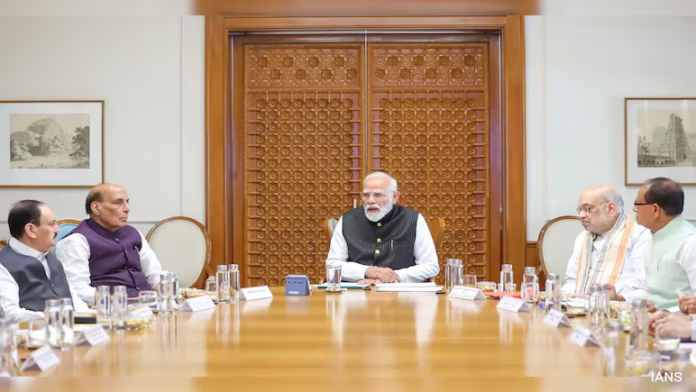

The Centre has constituted seven high-level empowered groups to assess and mitigate the economic fallout of the escalating conflict in West Asia, as concerns grow over disruptions to energy supplies, trade routes, fertiliser availability and inflation. The decision was taken following a high-level security review chaired by Prime Minister Narendra Modi, where officials evaluated the potential risks posed by the ongoing tensions involving Iran and global shipping routes.
The panels include senior bureaucrats, sectoral experts and representatives from key ministries. Their mandate is to monitor developments in real time and recommend swift policy responses to protect India’s economy. The move reflects heightened caution in New Delhi, given India’s dependence on imported crude oil, fertilisers and critical supply chains passing through the Middle East.
The first empowered group focuses on strategic and security-related issues, including defence preparedness, diplomatic coordination and domestic public order. The panel is convened by Foreign Secretary Vikram Misri and includes Home Secretary Govind Mohan and Defence Secretary Rajesh Kumar Singh. This group will evaluate geopolitical developments and advise on responses affecting national security and overseas interests.
A second panel, tasked with monitoring economic and financial risks, is headed by Department of Economic Affairs Secretary Anuradha Thakur. The group will examine supply chain disruptions, export-import challenges, currency pressures and broader macroeconomic implications. Senior officials from commerce, finance, labour, heavy industries and micro, small and medium enterprises departments are part of the panel, indicating a cross-sector approach to economic risk management.
The third empowered group focuses on petroleum, liquefied natural gas, LPG and broader energy supply issues. It is convened by Petroleum and Natural Gas Secretary Neeraj Mittal. Representatives from the ministries of power, coal and mines, along with executives from major public sector energy companies, will assess crude supply availability, shipping risks and pricing volatility. The panel is expected to track developments around key maritime chokepoints and recommend contingency plans.
Given India’s heavy reliance on fertiliser imports, the government has also formed a dedicated panel to monitor agricultural inputs. This group is led by Fertilisers Secretary Rajat Kumar Mishra. Officials from agriculture, farmers’ welfare and agricultural research departments, along with fertiliser industry executives, will evaluate supply risks and ensure timely availability for farmers. Any disruption in fertiliser imports could impact crop cycles and food inflation, making this panel crucial.
Another group will oversee inflation and essential commodities. Convened by Consumer Affairs Secretary Nidhi Khare, the panel includes representatives from pharmaceuticals, health, agriculture and animal husbandry departments. The objective is to monitor price movements, ensure availability of critical goods and prevent supply bottlenecks that could trigger inflationary pressure.
Transport and logistics challenges are being handled by a sixth empowered group led by Ports, Shipping and Waterways Secretary Vijay Kumar. This panel includes officials from civil aviation, road transport and railways. The group will track shipping disruptions, port congestion, cargo rerouting and aviation-related supply issues, particularly if maritime traffic through sensitive zones is affected.
The seventh panel focuses on information dissemination and public communication. Information and Broadcasting Secretary Sanjay Jaju will convene the group, which includes officials from multiple ministries. The panel will coordinate government messaging, counter misinformation and ensure timely updates on supply availability and price stability.
Officials said the empowered groups have been given broad terms of reference. These include assessing risks to energy supplies, monitoring global price movements, ensuring domestic availability of essential commodities and recommending policy interventions where needed. The panels are also expected to coordinate with industry stakeholders and state governments.
The formation of these groups comes amid rising volatility in global oil markets and concerns over potential disruptions to shipping routes connecting the Persian Gulf with Asia. Any prolonged instability in the region could affect India’s import bill, inflation trajectory and economic growth outlook.
India imports a significant portion of its crude oil and fertilisers from the Middle East. A spike in oil prices typically increases fuel costs, transportation expenses and overall inflation. Similarly, disruptions to fertiliser supplies could impact agricultural production and food prices. Officials said the government aims to respond proactively rather than react after disruptions occur.
The empowered groups are expected to meet frequently and submit recommendations directly to senior decision-makers. Their assessments will guide decisions on strategic reserves, import diversification, price stabilization measures and trade adjustments.
By setting up specialized panels covering security, economy, energy, agriculture, logistics and communication, the government has adopted a comprehensive approach to crisis management. The move underscores concerns about the potential ripple effects of geopolitical tensions on domestic economic stability.
As the situation in West Asia continues to evolve, policymakers in New Delhi are focusing on preparedness. The seven groups will monitor developments closely and help ensure that any external shocks are absorbed with minimal impact on consumers, businesses and farmers.