





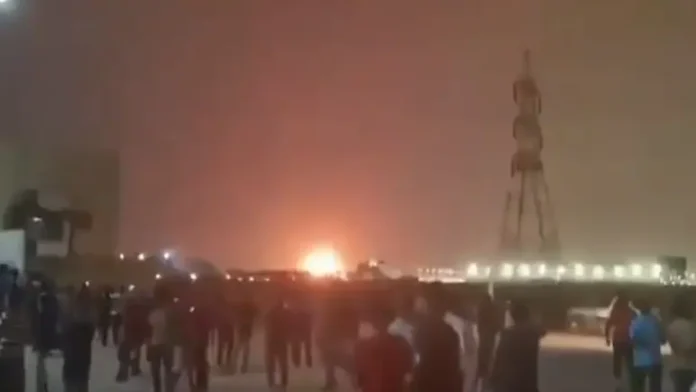

A major escalation in the ongoing Middle East conflict has sent shockwaves through global energy markets after Iran launched a missile strike on Qatar’s Ras Laffan industrial city, home to the world’s largest liquefied natural gas (LNG) export facility. The attack has forced a complete halt in production at the critical hub, intensifying fears of prolonged supply disruptions and rising energy costs worldwide.
The strike on Ras Laffan Industrial City marks one of the most significant attacks on global energy infrastructure in recent years. As tensions continue to spiral, the Gulf region already under strain from ongoing hostilities has become the epicentre of a deepening energy crisis.
A Strategic Energy Hub Under Fire
Ras Laffan is not just another industrial facility; it is the backbone of Qatar’s LNG exports and a cornerstone of global energy supply chains. Qatar ranks among the world’s top LNG exporters alongside the United States, Australia and Russia, supplying critical fuel to markets across Asia and Europe.
Following the strike, operations at the facility were suspended indefinitely as authorities assessed the extent of the damage. This comes on the heels of earlier attacks in March targeting gas fields linked to Qatar, forcing QatarEnergy to temporarily shut down production.
The escalation is widely seen as part of Iran’s broader retaliation strategy against US and Israeli actions in the region, including strikes on its own energy infrastructure such as the South Pars gas field, which forms part of the world’s largest natural gas reserve.
Energy Markets in Turmoil
The attack has compounded an already fragile situation in global energy markets. Shipping routes through the Strait of Hormuz through which nearly 20% of the world’s oil and gas supplies pass have been severely disrupted due to escalating military threats.
With tanker movements restricted and hundreds of vessels stranded near Gulf ports, the flow of energy supplies has slowed dramatically. Analysts estimate that more than 700 cargo ships are currently waiting in safe zones, unable to proceed through high-risk waters.
The resulting uncertainty has pushed global gas and oil prices higher, with traders factoring in the risk of prolonged disruptions. The situation has also raised concerns about supply shortages, particularly for countries heavily reliant on Gulf energy exports.
Ripple Effects on India
For India, the developments pose a serious challenge to energy security. The country depends on imports for roughly half of its natural gas requirements, with a significant share sourced from Qatar.
According to energy experts, nearly 40% of India’s LNG imports come from Qatar, accounting for about 20% of its total natural gas consumption. Any disruption at Ras Laffan, therefore, has immediate and far-reaching implications for the Indian economy.
Kirit Parikh, a noted energy economist, has warned that India may need to take urgent steps to manage the shortfall. These could include curtailing gas consumption, particularly in sectors such as power generation and heavy industry, which are among the largest consumers of natural gas.
India’s daily natural gas demand stands at approximately 189 million metric standard cubic metres per day (MMSCMD), with domestic production accounting for just over half of that figure. The remainder is met through imports, making the country vulnerable to external supply shocks.
Recent estimates suggest that around 47.4 MMSCMD of gas supplies have already been disrupted due to force majeure conditions triggered by the conflict. This has prompted state-run energy firms to seek alternative LNG cargoes from global markets, often at higher prices.
Strategic Adjustments and Challenges
In response to the crisis, Indian energy companies are diversifying sourcing strategies and securing shipments from other producers. However, replacing Qatari LNG is not a straightforward task, given its scale, pricing advantages and long-term supply agreements.
The shift towards alternative suppliers may also increase import costs, placing additional pressure on domestic energy prices and potentially impacting industries and consumers alike.
Furthermore, the timing of the crisis adds to the challenge. With India heading towards peak summer months, energy demand is expected to surge, particularly for electricity generation and cooling needs. Reduced gas availability could strain power systems and lead to higher reliance on costlier or more polluting fuel sources.
A Prolonged Crisis Ahead?
The broader geopolitical situation remains highly volatile. Since the conflict began in late February, Iran has intensified its missile and drone campaigns across the region while targeting key energy assets. At the same time, US and Israeli forces have continued operations against Iranian military and leadership targets.
The Strait of Hormuz has effectively turned into a conflict zone, amplifying risks for global trade and energy transportation. The absence of a clear diplomatic resolution suggests that disruptions could persist in the near term.
For India and other energy-importing nations, the priority now lies in managing immediate supply challenges while preparing for longer-term shifts in global energy dynamics.
As the situation unfolds, the attack on Ras Laffan underscores a critical reality: in an interconnected world, regional conflicts can rapidly evolve into global economic crises, with energy security at the centre of the storm.