





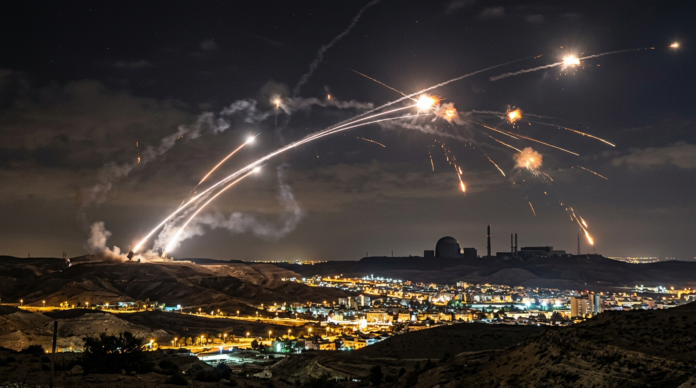

Tensions between Iran and Israel escalated sharply after Iranian missile strikes targeted areas near Israel’s sensitive nuclear research zone in the southern desert, prompting renewed threats of retaliation and raising global concerns over nuclear security. Israeli officials described the situation as one of the most serious developments in the ongoing conflict, though international monitors reported no damage to nuclear infrastructure.
Benjamin Netanyahu said emergency response teams were being rushed to the cities of Arad and Dimona following the missile barrage. He characterized the situation as a “very difficult evening” and vowed that Israel would continue striking Iranian targets in response. The remarks signaled that the confrontation is far from over, with both sides appearing prepared for further escalation.
Iranian leaders, meanwhile, portrayed the attack as a strategic breakthrough. Mohammad Bagher Ghalibaf said that the inability of Israeli defenses to fully intercept missiles near Dimona indicated the conflict had entered a “new phase.” His statement suggested that Tehran views the strike as evidence of its expanding operational reach and improved missile capabilities.
The International Atomic Energy Agency (IAEA) moved quickly to calm fears of a nuclear incident. The agency said it had not detected any damage to Israel’s nuclear research infrastructure and confirmed that regional monitoring systems reported no abnormal radiation levels. The reassurance helped ease immediate concerns about potential nuclear contamination, though the proximity of the strikes to sensitive facilities underscored the risks.
Dimona is home to Israel’s primary nuclear research center, established in 1958 in the remote Negev desert. The facility has long been at the center of international speculation regarding Israel’s nuclear capabilities. While Israel has never officially confirmed possessing nuclear weapons, analysts widely believe the country maintains an undeclared nuclear arsenal under a policy of deliberate ambiguity.
The targeting of areas near Dimona is therefore seen as highly symbolic, as well as strategically significant. Any perceived threat to nuclear-related infrastructure carries implications far beyond the immediate battlefield, potentially triggering broader international alarm and diplomatic pressure.
Iran’s military wing, the Islamic Revolutionary Guard Corps (IRGC), claimed responsibility for the operation and said additional targets were struck across southern Israel. The group also asserted that military sites in Kuwait and the United Arab Emirates were targeted, indicating a widening geographic scope of the confrontation. These claims could not be independently verified, but they suggest that the conflict is expanding beyond bilateral exchanges.
The latest escalation comes against the backdrop of long-standing nuclear tensions between Iran and Israel. Israel has repeatedly accused Tehran of pursuing nuclear weapons capability, while Iran insists its nuclear program is for peaceful purposes. The dispute has led to years of covert operations, cyberattacks, and occasional direct strikes.
Iran’s own nuclear infrastructure has also been targeted in previous conflicts. The Natanz uranium enrichment site, which hosts underground centrifuges, sustained significant damage during hostilities in 2025. That incident intensified the cycle of retaliation and heightened sensitivity around nuclear facilities on both sides.
Military analysts warn that strikes near nuclear-related locations increase the risk of miscalculation. Even if infrastructure remains intact, repeated attacks in such areas could escalate tensions rapidly and invite broader international involvement. The absence of radiation leaks in this case has provided temporary relief, but experts say the situation remains volatile.
Israel’s emergency response measures reflect these concerns. Authorities deployed additional rescue teams, secured potential impact zones, and conducted damage assessments. Civil defense protocols were activated in several southern towns, with residents advised to remain alert.
Meanwhile, Iran’s messaging indicates confidence in its ability to challenge Israel’s air defense systems. Statements from Iranian officials emphasized that penetrating heavily defended zones demonstrates operational evolution. Such rhetoric suggests that both sides are preparing for a prolonged confrontation.
International observers are closely monitoring developments, particularly given the nuclear sensitivities involved. Any escalation near nuclear infrastructure could draw intervention from global powers and intensify diplomatic efforts to de-escalate.
For now, the immediate crisis appears contained, with no confirmed damage to Israel’s nuclear research center. However, the incident underscores the increasingly dangerous trajectory of the conflict. With missile exchanges expanding in scale and geography, the risk of broader regional instability continues to grow.