





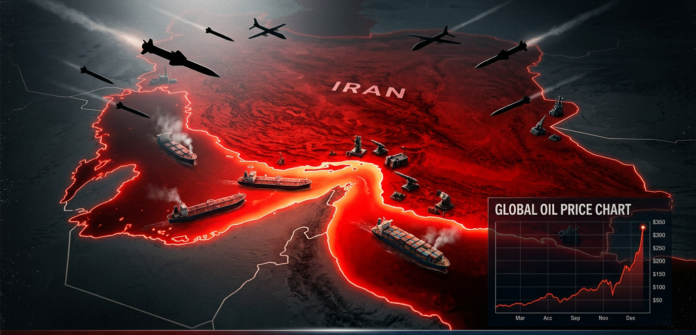

The escalating confrontation between Iran and the United States has taken a sharper turn after Tehran warned it could shut the Strait of Hormuz indefinitely if Washington follows through on threats to strike Iranian energy infrastructure. The warning came after U.S. President Donald Trump issued a 48-hour ultimatum demanding Iran fully reopen the critical maritime corridor.
Iranian officials signaled that any attack on the country’s power generation network would trigger sweeping retaliation, including closure of the vital oil transit route and potential strikes on energy and communications infrastructure linked to U.S. interests. The developments have intensified global concerns over energy supply disruptions, pushing markets into volatile territory and raising fears of a broader regional conflict.
According to Iranian military statements, Tehran would keep the Strait of Hormuz closed until any damaged energy facilities are rebuilt if U.S. forces carry out strikes. Such a move would effectively choke one of the world’s most critical oil arteries, through which a substantial portion of global crude shipments pass daily. Analysts warn that a prolonged closure could trigger an unprecedented energy shock.
Iran’s message also included a broader warning. Officials indicated that if electricity outages spread across Iranian cities, the country could target Israeli infrastructure and companies in the wider region with U.S. shareholders. The threat suggests that Tehran may expand the conflict beyond direct military targets, potentially impacting commercial and civilian systems.
President Trump’s ultimatum, delivered via social media, demanded that Iran restore full navigation through the Strait within 48 hours. He warned that failure to comply would result in the destruction of Iranian power plants, beginning with the largest facilities. The statement came as oil prices surged and pressure mounted domestically for Washington to secure global energy supply routes.
The Strait of Hormuz has already seen disruptions in shipping activity amid rising tensions. Tanker movement has slowed significantly, and insurance costs for vessels passing through the region have climbed sharply. Energy traders remain cautious, with many rerouting shipments or delaying cargoes due to uncertainty.
Oil prices reacted immediately to the standoff. U.S. benchmark crude briefly approached $100 per barrel, while Brent crude also moved higher. Markets remain sensitive to any developments involving Hormuz, given that even partial disruptions can tighten supply and drive price spikes.
For oil-importing economies such as India, the stakes are particularly high. Sustained elevated crude prices could push inflation higher, widen the current account deficit, and weaken currency stability. Economists warn that prolonged geopolitical tension may also trigger capital outflows and pressure equity markets.
Meanwhile, the conflict on the ground continues to intensify. Iranian missiles struck two communities in southern Israel late Saturday, damaging buildings and injuring dozens. The attacks occurred not far from Israel’s main nuclear research region, raising additional concerns about escalation involving sensitive infrastructure.
The broader war has already taken a heavy humanitarian toll. Reports indicate that more than 1,500 people have been killed in Iran, over 1,000 in Lebanon, and multiple casualties recorded in Israel and among U.S. military personnel. Civilians across the Gulf region have also been affected, including maritime workers caught in the crossfire. Millions of residents in Iran and Lebanon have been displaced as fighting spreads.
Strategic analysts warn that the Hormuz standoff represents a dangerous escalation beyond conventional military exchanges. A prolonged closure could disrupt global trade routes, strain energy markets, and draw additional countries into the conflict. Shipping lanes in the Gulf are already under heightened surveillance, with naval deployments increasing in response to the threat.
The situation is further complicated by the interconnected nature of regional energy infrastructure. Strikes on power plants, refineries, or communications networks could trigger cascading effects across neighboring economies. Financial markets, already sensitive to geopolitical risks, are likely to remain volatile as uncertainty persists.
Diplomatic efforts to defuse tensions have so far shown limited progress. Calls for restraint from international actors have been overshadowed by escalating rhetoric and retaliatory threats. Observers warn that the next 48 hours could prove critical in determining whether the standoff shifts toward negotiation or further military confrontation.
As the conflict enters a new phase, the possibility of an indefinite Hormuz shutdown has emerged as one of the most serious risks. With oil markets on edge and military tensions rising, global stakeholders are closely monitoring developments. Any miscalculation could have far-reaching consequences for energy security, financial stability, and regional peace.