






Karnataka |
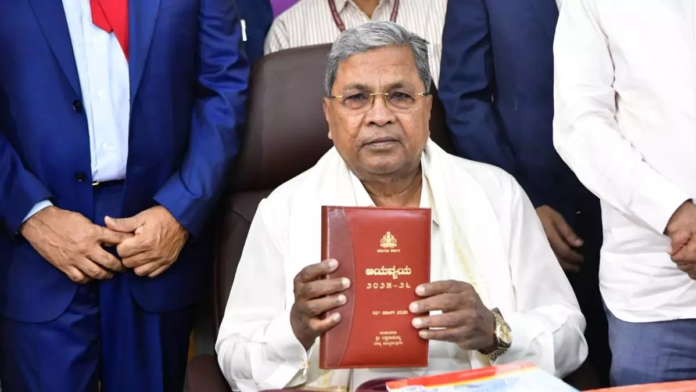
Karnataka Chief Minister Siddaramaiah presented his 16th state budget with a total outlay of ₹4.09 lakh crore, balancing welfare spending, infrastructure expansion, and economic growth. While the budget reinforces social security and public welfare, it raises concerns over fiscal sustainability and investor confidence in one of India’s fastest-growing states.
Key Economic Highlights: Infrastructure & Development in Focus
With five major welfare schemes—Gruha Lakshmi, Gruha Jyoti, Anna Bhagya, Yuva Nidhi, and Shakti—driving state finances, Karnataka is prioritizing grassroots economic development. However, the budget also includes substantial allocations aimed at long-term economic growth and investor confidence:
- ₹1.3 lakh crore for welfare programs, strengthening rural consumption and financial inclusion.
- ₹11,000 crore for Bengaluru’s urban infrastructure, targeting metro expansion, traffic decongestion, and road connectivity.
- ₹41,000 crore for education, focusing on skill development and employability in high-growth sectors.
- ₹19,000 crore for healthcare, boosting public health infrastructure and access.
- ₹20,000 crore in industrial incentives, attracting investments in tech, manufacturing, and renewable energy.
Fiscal Outlook: Rising Deficit and Investor Sentiment
The state’s fiscal deficit is projected at 2.87% of GSDP, close to the 3% limit under the Fiscal Responsibility and Budget Management (FRBM) Act. This raises concerns over Karnataka’s long-term fiscal health, particularly for foreign and domestic investors monitoring the state’s financial stability.
The Chief Minister maintains that higher social spending will drive economic growth by increasing consumer spending, job creation, and skill development. However, investors remain cautious about the impact of rising subsidies and potential tax hikes on business growth.
What This Means for Businesses, Investors & Policymakers
- Boost to Local Consumption: Welfare schemes will drive demand in FMCG, retail, and banking sectors, making Karnataka a consumption-led growth market.
- Infrastructure & Industrial Expansion: Tech, manufacturing, and real estate stand to gain from state-driven capital investments.
- Fiscal Constraints on Future Investments: Policymakers will need to balance welfare spending with revenue generation to maintain Karnataka’s investment-friendly reputation.
With Karnataka being a key contributor to India’s GDP and a startup hub, economic observers, business leaders, and investors will closely track the state’s fiscal management and investment incentives. As the government pushes for inclusive growth and infrastructure development, the challenge remains—can Karnataka sustain its economic momentum while managing its fiscal deficit?