






New Delhi |
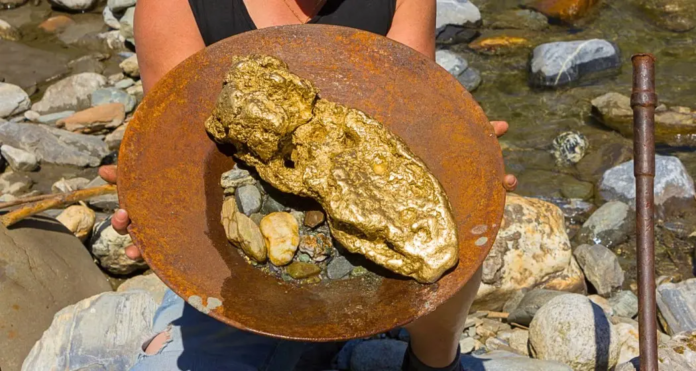
Pakistan has discovered gold reserves worth ₹80,000 crore in the Indus River, a development that could impact global gold markets and trade dynamics in South Asia. While this discovery brings economic hopes for Pakistan, it also raises questions for India’s resource management, trade policies, and geopolitical strategies.
Why Should India Care?
For Indian readers, this isn’t just a story about Pakistan—it’s about regional resource control, India’s gold imports, and potential economic shifts in South Asia. Given that India is one of the world’s largest consumers of gold, any increase in supply—especially from a neighboring country—could influence global prices and India’s gold trade policies.
Moreover, this discovery highlights the mineral wealth of the Himalayas, a region shared by India. Since gold deposits in Pakistan likely originated from the Himalayan ranges, this raises a crucial question: Could India also be sitting on undiscovered gold reserves?
The India Connection: Gold’s Journey from the Himalayas to the Indus
Geologists believe the gold found in the Indus River originates in the upper reaches of the Himalayas, where erosion and water flow transport gold particles downstream. The same geological conditions exist in parts of Indian-administered Jammu & Kashmir and Himachal Pradesh.
This discovery should push Indian authorities to conduct more mineral exploration in Himalayan rivers and border states. If Pakistan has struck gold, there’s a good chance that India’s side of the Himalayas holds untapped reserves as well.
Economic Impact on India
- Gold Prices & Imports: If Pakistan starts large-scale mining, it could increase gold supply in the region, potentially lowering international prices. India, which imports around 800-900 tonnes of gold annually, may benefit from cheaper imports if this affects global markets.
- Trade & Diplomacy: Could Pakistan’s gold industry lead to a new trade equation in South Asia? Will it impact India’s gold trade policies? While India has a well-established jewelry and gold processing industry, Pakistan may seek foreign investments to develop its mining sector, attracting interest from countries like China or Gulf nations.
- Investment Opportunities: Indian investors tracking global commodity markets should keep an eye on how Pakistan manages this discovery. If properly exploited, it could create business opportunities for mining firms, equipment suppliers, and trade companies.
Challenges for Pakistan: Is This Really a Game-Changer?
While Pakistan hopes to boost its struggling economy with this discovery, the road ahead is full of challenges:
- Lack of Infrastructure: Pakistan lacks large-scale mining expertise and will need foreign investments.
- Illegal Mining Risks: Without proper regulation, illegal mining activities could disrupt the economy rather than boost it.
- Political Instability: Given Pakistan’s ongoing political and economic turmoil, will this discovery actually be developed or just remain a theoretical asset?
Geopolitical Implications: A Regional Gold Rush?
Beyond trade and economy, this discovery also has geopolitical significance. India must closely watch who invests in Pakistan’s mining sector—will it be China, Western countries, or Middle Eastern investors? A financially stronger Pakistan could shift regional dynamics, and India must consider these factors while shaping its foreign policy and trade strategies.
What’s Next for India?
India should take this as a wake-up call to:
✅ Explore its own mineral wealth in Himalayan riverbeds and gold-rich regions.
✅ Strengthen its gold policies to maintain its leadership in global gold processing.
✅ Monitor global gold prices for potential impacts on trade and investment.
✅ Watch Pakistan’s next moves in securing foreign investment and launching large-scale mining.
As Pakistan celebrates its gold discovery, India must focus on its own resource strategy. The real story isn’t just about what Pakistan has found—but about what India might be overlooking.