





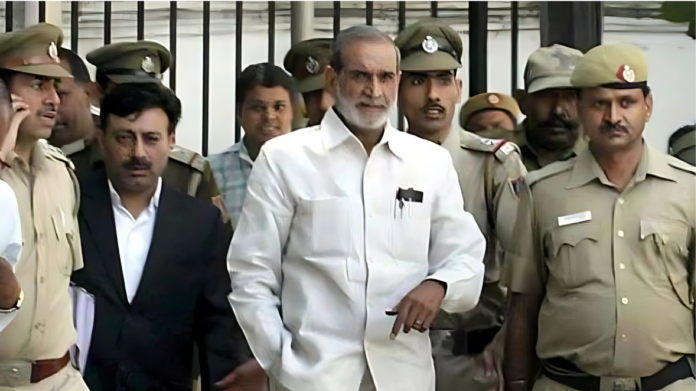

After more than 40 years of waiting, justice has finally caught up with former Congress MP Sajjan Kumar. A Delhi court on Tuesday sentenced him to life imprisonment for instigating and leading a mob that brutally killed two Sikh men—Jaswant Singh and his son, Tarundeep Singh—during the 1984 anti-Sikh riots.
This isn’t Kumar’s first conviction. He is already serving a sentence in another riot-related case, making him one of the most high-profile politicians to be held accountable for the state-backed violence that followed the assassination of Indira Gandhi.
What Happened in 1984?
On November 1, 1984, in Delhi’s Raj Nagar area, a mob of thousands went on a rampage. Looting, arson, and targeted killings of Sikhs spread like wildfire across the city. Witnesses and survivors say Sajjan Kumar was at the forefront—instigating, abetting, and ensuring that the mob carried out its brutal agenda.
Jaswant Singh and his son were dragged out of their home, beaten mercilessly, and burned alive on a vacant plot. Their family members, too, were brutally attacked and left with grievous injuries. Their only fault? They were Sikh.
A Long Road to Justice
Despite eyewitness testimonies, survivor accounts, and ample evidence, Kumar remained protected for decades—a stark reminder of the political impunity surrounding the 1984 riots. It took relentless struggles by victims’ families, activists, and journalists to keep the fight alive. The case was initially brushed aside by the Punjabi Bagh police station, only to be reopened by a Special Investigation Team (SIT) years later.
Even then, it took decades to break through the layers of political influence shielding Kumar.
A Step Forward, But Not the End
The verdict marks an important step towards justice for the thousands of Sikhs killed in the 1984 pogrom, but it’s far from enough. The political establishment that enabled this massacre remains largely unscathed. Many of the perpetrators still walk free, protected by power and privilege.
For the victims, their families, and the Sikh community, the scars of 1984 remain fresh. This conviction is not just about Sajjan Kumar—it’s about accountability for state-sponsored violence that was allowed to continue unchecked for decades.
Justice may have been delayed, but as survivors and activists remind us: it is never too late to hold the powerful accountable.