






📍 New Delhi |
A startling new report has revealed that a U.S.-based satellite imagery company saw an unusual surge in demand for high-resolution images of Pahalgam—weeks before the April 22 terror attack in the region that left 26 civilians dead.
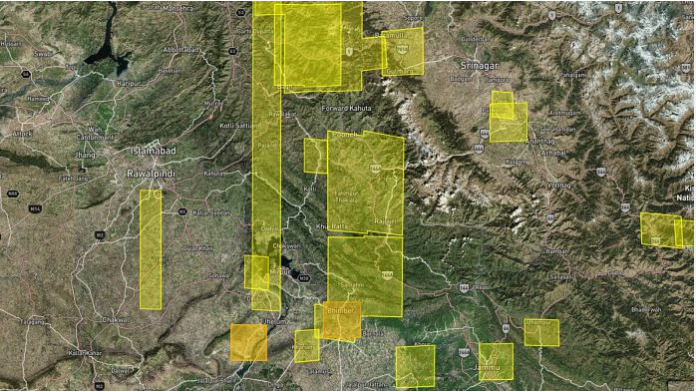
Between February 2 and 22, 2025, Maxar Technologies received at least 12 image requests for the Pahalgam region—more than double its usual volume. This spike is now raising alarm bells among intelligence analysts and defence experts, especially considering the sensitive nature of the region.
🔍 Pakistan-Based Company Under Scrutiny
The spike reportedly occurred after Maxar partnered with Business Systems International Pvt Ltd (BSI), a Pakistani geospatial firm. BSI has a controversial background: its founder Obaidullah Syed was previously convicted by a U.S. federal court for illegally exporting high-performance computer equipment to Pakistan’s Atomic Energy Commission (PAEC), an agency linked to nuclear weapons and missile development.
Though it’s unclear whether BSI directly ordered the satellite images, the timeline has led experts to question the intent behind the data gathering.
🛰️ What Satellite Images Reveal
Maxar’s satellite images start at ₹3 lakh per image, with prices rising based on resolution. Aside from Pahalgam, orders were also placed for images of Pulwama, Anantnag, Baramulla, Rajouri, and Poonch—all sensitive border regions with a history of militant activity.
An ISRO scientist said:
“Satellite surveillance is now central to modern warfare and intelligence. While we can’t definitively say the images were used to plan the Pahalgam attack, India should formally request an investigation from Maxar.”
⚠️ A Modern Intelligence Tool, or a Risky Loophole?
Satellite imagery is widely used by defence agencies to track troop movements, detect infrastructure development, monitor border activity, and even assess smuggling routes. But when such data ends up in the wrong hands—via private orders—it poses serious national security implications.
India’s intelligence community is now reportedly considering measures to tighten oversight on private satellite image procurement—especially in sensitive regions.