





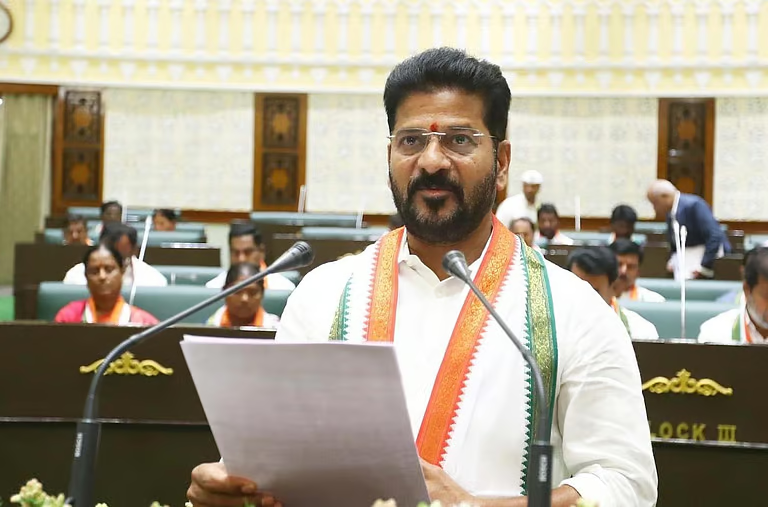

Hyderabad: The Telangana government has announced a statewide caste survey to assess the socio-economic conditions of different communities. The move aims to reshape reservation policies by ensuring fair representation in government jobs and educational institutions.
Survey Insights and Reservation Changes
The survey revealed that Backward Classes (BCs) constitute 56.33% of Telangana’s population. Based on this data, the state assembly has passed two key bills to increase BC reservations from 23% to 42% in government employment and education.
Other findings from the survey include:
- Scheduled Castes (SCs): 17.43% of the population
- Scheduled Tribes (STs): 10.45%
The government believes these insights will help create equitable policies and improve opportunities for underrepresented communities.
Government’s Stand on Social Justice
Chief Minister Revanth Reddy emphasized that the move aligns with the state’s commitment to social justice and inclusive development. The enhanced reservation structure aims to bridge socio-economic gaps and empower marginalized communities.
Next Steps and Implementation
The bills will now be sent to the Governor for approval before becoming law. Telangana joins a growing list of Indian states revising reservation policies based on updated demographic data.
Concerns and Challenges
While the policy shift has been welcomed, experts caution that its implementation needs careful monitoring to ensure it benefits the intended communities without creating administrative hurdles.