






Raipur, Chhattisgarh |
A shocking case of teacher misconduct has surfaced from Surguja district, Chhattisgarh, where a primary school teacher was suspended for repeatedly coming to school drunk and assaulting students. This disturbing incident has once again highlighted the issue of accountability in India’s education system, raising concerns among parents, policymakers, and education experts.
What Happened?
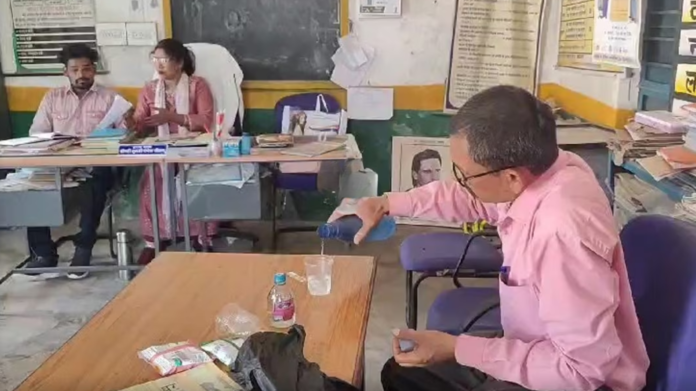
On February 24, 2025, Shailendra Singh Porte, an assistant teacher at a government primary school in Gurmagra Khurd Basti Para, showed up heavily intoxicated during school hours. According to reports, he not only failed to conduct classes but also physically assaulted students before attempting to leave.
The situation escalated when angry parents and local residents stormed the school and confronted the administration. Cluster Coordinator Vinod Gupta conducted an on-the-spot investigation and found the teacher visibly drunk during school hours.
Not the First Offense!
Porte had been previously warned and even faced salary deductions for similar misconduct. However, he continued his habitual drinking on duty, showing complete disregard for students’ education and safety.
Despite previous complaints, local education officials failed to take strict action until public outrage forced them to act.
Education Department Takes Action
Following mounting pressure, District Education Officer (DEO) Ashok Sinha suspended the teacher, citing violations of:
✅ Chhattisgarh Civil Services (Conduct) Rules, 1965
✅ Chhattisgarh Civil Services Classification, Control, and Appeal Rules, 1966 (Rule 9)
Porte has now been removed from teaching duties and assigned to the Udaipur Block Education Officer’s office pending further action.
Bigger Issue: How Widespread is This Problem?
This incident is not an isolated case. Reports indicate that in many remote villages, teachers—including women—arrive at school intoxicated, neglect classes, and show little accountability.
Even more alarming is that students themselves are taking action! In one viral case, students in another Chhattisgarh school were seen chasing a drunken teacher and throwing slippers at him, frustrated by repeated neglect of their education.
With social media bringing such cases to light, the education department is under pressure to enforce stricter rules and ensure that teachers remain professional and committed to their duty.
What This Means for India’s Education System?
This raises serious concerns for education stakeholders:
📌 Are rural schools facing a teacher accountability crisis?
📌 How can local education departments enforce discipline?
📌 Should stricter background checks and mental health assessments be introduced for educators?
At a time when India is focusing on education reforms, digital learning, and skill development, incidents like these damage trust in the system. A school should be a place of learning and growth—not a battleground for misconduct and negligence.
For policymakers, educators, and parents, this should serve as a wake-up call—stronger teacher accountability measures are needed to ensure students receive the quality education they deserve.