






New Delhi
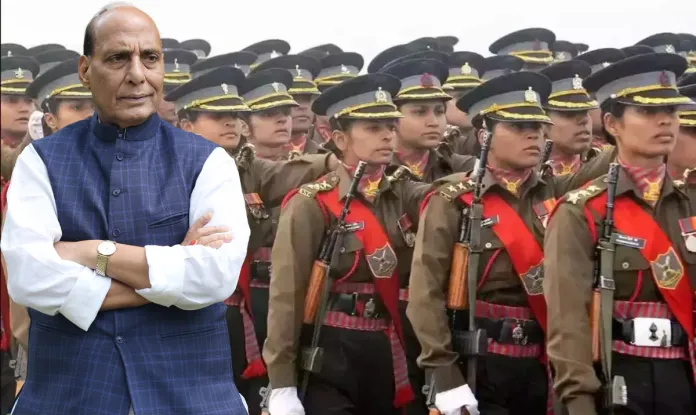
In a continued push for gender equality in the defense sector, Defense Minister Rajnath Singh has reaffirmed the government’s commitment to making the Indian Armed Forces more inclusive for women. Addressing the nation during an interaction with Lieutenant Commanders Dilna K and Roopa A—who are currently leading the Navika Sagar Parikrama II, an all-women global sailing expedition—Singh praised their resilience and called their journey a symbol of “Nari Shakti” (women’s empowerment) in India’s defense sector.
Expanding Opportunities for Women in Defense
The government has been actively implementing policies to increase women’s participation in the armed forces. Key initiatives include:
- Permanent Commission for Women: Women officers are now eligible for permanent commission in all three defense services, allowing them to serve longer tenures and hold commanding positions.
- Expanded Roles in Combat: The Indian Air Force inducted its first batch of female fighter pilots in 2016, a historic milestone. The Indian Army and Navy have also expanded roles for women, including in commanding roles and frontline deployments.
- Navika Sagar Parikrama II: A second edition of the prestigious all-women global circumnavigation expedition has been launched to showcase the growing role of women in the Navy. The initiative highlights India’s progress in empowering women in maritime and defense sectors.
- Enhanced Training & Recruitment: The armed forces are revising training protocols to integrate more women into combat, technical, and strategic roles.
Current Status of Women in the Armed Forces
Despite these reforms, the overall percentage of women in India’s defense forces remains low:
- Indian Army: Women make up about 3% of the total personnel.
- Indian Navy: Around 2.8% of naval personnel are women, with increasing recruitment in officer roles.
- Indian Air Force: The most inclusive, with over 8.5% of personnel being women, including fighter pilots and ground duty officers.
With ongoing policy changes, the government aims to significantly increase these numbers, providing equal opportunities in defense careers.
Challenges and the Road Ahead
While progress has been made, challenges remain:
- Combat Role Expansion: Though women are now in combat roles, further integration into infantry and special forces is a debated topic.
- Infrastructure & Logistics: The armed forces are working to upgrade accommodations and facilities to support more female personnel.
- Societal Mindset: Changing traditional perspectives on women in military roles is essential for long-term inclusivity.
Why This Matters
Gender inclusivity in defense is not just about representation—it enhances operational effectiveness and ensures that India utilizes its best talent for national security. The government’s continued reforms signal a progressive shift, ensuring women have equal opportunities to serve and lead in the country’s defense forces.
As India moves towards a more inclusive military, these steps pave the way for future generations of women to take on leadership, combat, and strategic roles, reinforcing India’s commitment to gender equality and national security.