Rajasthan Royals began their IPL 2026 campaign in emphatic fashion as teenage sensation Vaibhav Sooryavanshi produced a breathtaking 15-ball half-century to dismantle Chennai Super...
The World Health Organization (WHO) has issued a global health advisory warning against the use and distribution of three Indian-manufactured cough syrups Coldrif, Respifresh TR, and ReLife after they were linked to the deaths of multiple...
The World Health Organization (WHO) has issued a global health advisory warning against the use and distribution of three Indian-manufactured cough syrups Coldrif, Respifresh TR, and ReLife after they were linked to the deaths of multiple...
A public interest litigation (PIL) has been filed in the Supreme Court of India seeking a Central Bureau of Investigation (CBI) probe into the deaths of children allegedly linked to contaminated cough syrups manufactured by Indian...
In a significant shift to its messaging features, Instagram has announced that it will discontinue its end-to-end (E2E) encrypted messaging option starting May 8, 2026. The decision, confirmed by parent company Meta, marks a notable change...
In a significant shift to its messaging features, Instagram has announced that it will discontinue its end-to-end (E2E) encrypted messaging option starting May 8, 2026. The decision, confirmed by parent company Meta, marks a notable change...
WhatsApp has begun rolling out a new feature called Group Message History, designed to make it easier for users joining an existing group chat to catch up on recent conversations. The update allows admins and, in...
Indian financial markets witnessed sharp volatility on Monday as escalating geopolitical tensions in West Asia and surging crude oil prices triggered widespread selling across sectors. Investor sentiment weakened significantly amid growing concerns over potential disruptions in...
Indian financial markets witnessed sharp volatility on Monday as escalating geopolitical tensions in West Asia and surging crude oil prices triggered widespread selling across sectors. Investor sentiment weakened significantly amid growing concerns over potential disruptions in...
Indian financial markets witnessed sharp volatility on Monday as escalating geopolitical tensions in West Asia and surging crude oil prices triggered widespread selling across sectors. Investor sentiment weakened significantly amid growing concerns over potential disruptions in...
Stay tuned For Updates
Subscribe to our latest newsletter and never miss the latest news!
Our newsletter is sent once a week, every Monday.
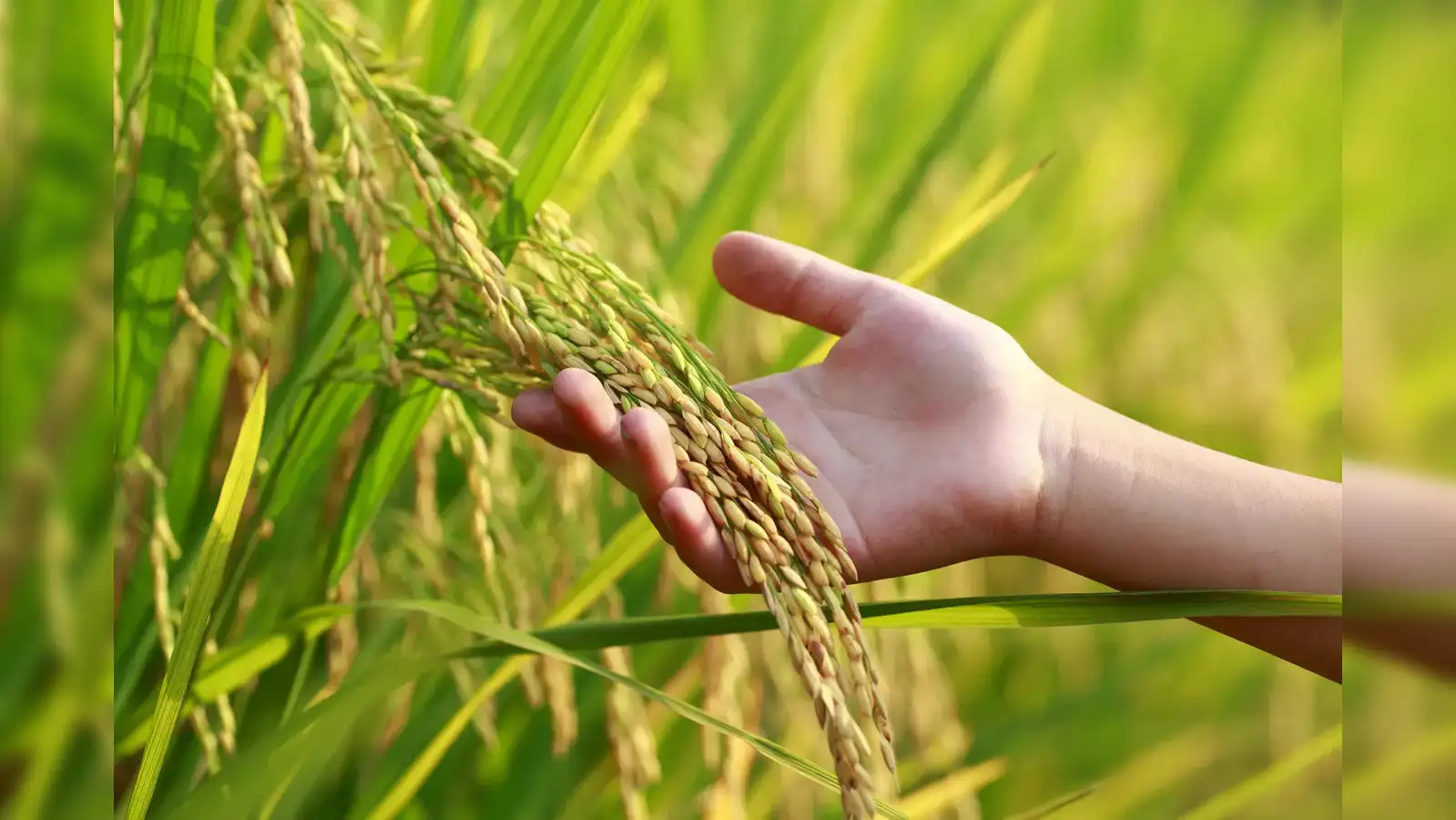
India has officially entered the global spotlight by becoming the first country to develop rice varieties using genome editing technology. The government hails this move as a leap toward sustainable agriculture. However, while the science may be groundbreaking, experts and farmers are divided over what this means for the future of Indian farming.
Union Agriculture Minister Shivraj Singh Chouhan announced on May 4, unveiling two genome-edited rice varieties developed by the Indian Council of Agricultural Research (ICAR). The seeds are expected to reach farmers after regulatory approval within six months, with mass production set for the next three cropping seasons.
🌱 The Two New Rice Varieties
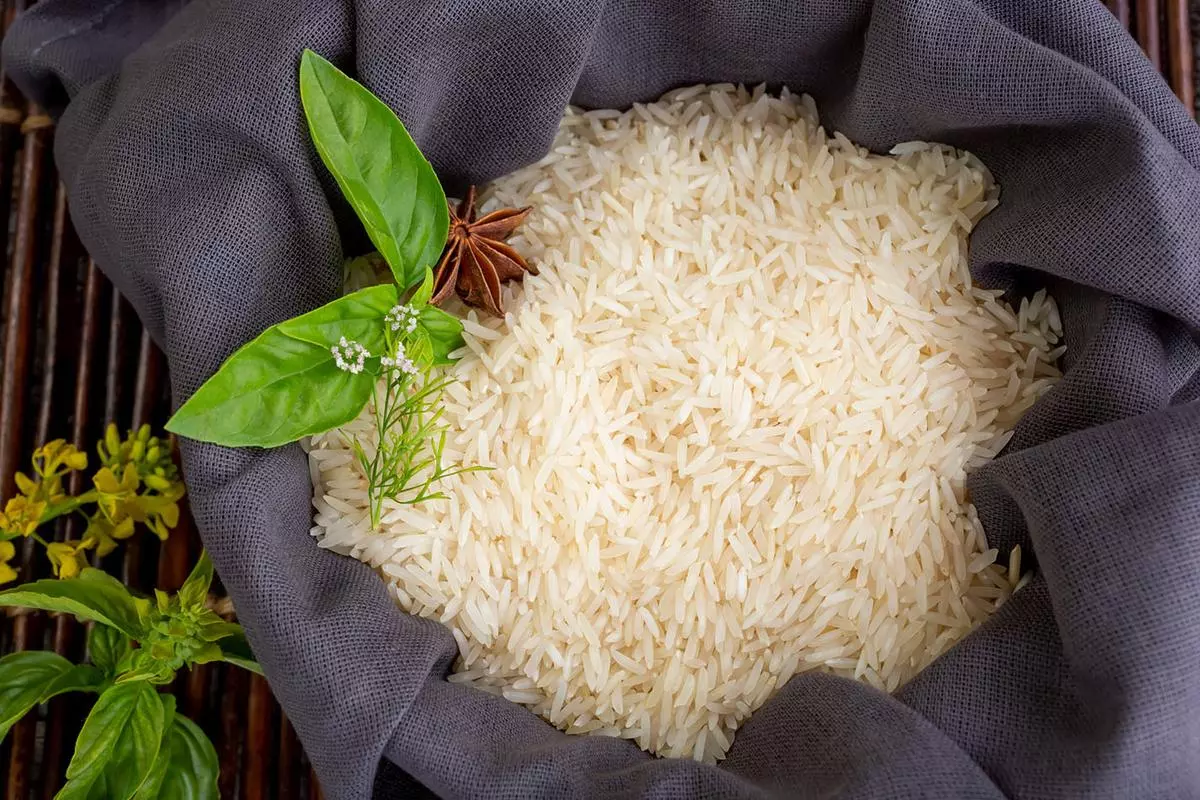
A representational rice image
1. DRR Dhan 100 (Kamala)
Developed from the popular Samba Mahsuri variety
Features: Drought resistance, early maturity, and higher nitrogen efficiency
Yields: 5.37 tonnes per hectare (vs. 4.5 tonnes in parent variety)
2. Pusa DST Rice 1
Based on MTU1010
Designed for saline soil conditions (inland and coastal)
Yields: 3,508 kg per hectare — up to 30.4% more under stress conditions
What is Genome Editing?
Unlike genetically modified (GM) crops that insert foreign genes, these rice varieties were created using Site-Directed Nuclease techniques (SDN-1 and SDN-2) — a method that alters the crop’s genes for desirable traits like yield or climate resistance.
Dr. Viswanathan C. (IARI).
“There is no foreign DNA in the final product,” said Dr. Viswanathan C. from the Indian Agricultural Research Institute (IARI). “This is not genetic modification. It’s precision breeding using the plant’s own genome.”
What Makes It Different?
Faster maturity saves water, fertilizer, and reduces methane emissions
Adaptability to saline and drought-prone regions, addressing key challenges in Indian agriculture
Yield improvement without compromising native crop traits
Exempt from GM crop regulations in many countries due to non-transgenic methods
Farmer Concerns and Activist Objections
Not everyone is celebrating the announcement.
Farmer representative Venugopal Badaravada, who was part of ICAR’s governing body, raised concerns about the lack of transparency, field-level data, and public consultation. He was removed from the body soon after making his concerns public.
Meanwhile, the Coalition for a GM-Free India has alleged that genome editing is being falsely portrayed as completely safe and precise. They argue that:
Many genome-editing tools are protected under global Intellectual Property Rights (IPR)
This may undermine seed sovereignty and put small farmers at risk of legal and financial dependence on private biotech firms
Public regulatory debate is missing in India’s hurried rollout
“India is compromising on seed sovereignty by bringing in IPR-entangled technologies,” the group said in a public statement.
What Happens Next?
Field trials are already completed under ICAR’s All India Coordinated Research Project on Rice (2023–2024).
The government aims to scale up production by mid-2026.
The debate over regulations, ownership, and transparency is expected to intensify.