





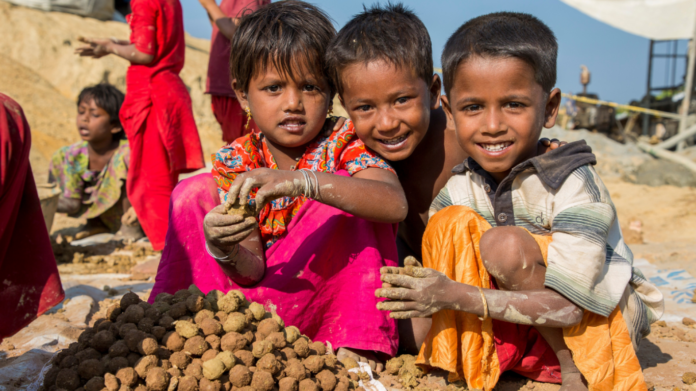

Supreme Court of India has stated that no child, no matter their nationality or refugee status, should be stopped from going to school. The decision aims to help Rohingya refugee children get access to schools and healthcare, solving long-standing problems caused by complicated rules and government delays.
What the Petition Demands
The Public Interest Litigation (PIL) submitted to the Supreme Court asks for:
✅ Free education for all Rohingya children without Aadhaar-based restrictions.
✅ Permission to appear for board exams (Class 10, 12, and graduation) without ID proof.
✅ Extension of government benefits such as free healthcare and subsidized food rations (Antyodaya Anna Yojana & Food Security Act).
Problems in Getting Education
The Right to Education Act, 2009, says that all children between 6 and 14 years have a right to free and compulsory education. But in reality, its implementation has not been smooth, especially for Rohingya refugees who do not have Aadhaar cards—something many schools and hospitals demand.
During the hearing, Justice Surya Kant said it is important to know where Rohingya families in Delhi are living.
“Understanding their housing conditions—whether in camps, slums, or rented homes—will help in deciding the best way to support them,” he said.
Advocate Colin Gonsalves, representing the Rohingya Human Rights Initiative (RHHI), pointed out that denying education because of missing Aadhaar cards is against India’s promise of education for all. “They are not Indian citizens and therefore cannot get Aadhaar. But that should not stop them from going to school or getting healthcare,” he said.
The Gap Between Law and Reality
While India’s laws promise equal rights to education and healthcare, Rohingya children still face many hurdles. A 2023 study by the Centre for Equity Studies found that nearly 75% of Rohingya children in Delhi are not in school due to:
- Language problems
- Money issues
- No proper documents
Experts say clear government instructions are needed to allow Rohingya children into schools without Aadhaar. Prof. Ramesh Chand, an education expert, said, “This decision shows India’s promise to give education to all, but unless action is taken, it will just remain a rule on paper.”
What’s Next? Will the Government Act?
Now that the Supreme Court has spoken, it is up to the government to make things happen. Schools, hospitals, and welfare departments must get clear guidelines to follow this order.
The next hearing is in ten days, where the court is expected to give more details on how this decision will be put into action. The outcome will be important for India’s future refugee policies, setting an example of how displaced people should be treated.